



You don’t shake a Negroni. You don’t stir a Whisky Sour. That may sound arbitrary, but there’s a simple rule behind it that you’ll never forget after reading it once.
The rule of thumb in one sentence
Does your cocktail contain only clear, alcoholic ingredients? Stir it. Does it contain juice, syrup, cream, egg, or anything else cloudy? Shake it.
Martini, Manhattan, Negroni, Old Fashioned: all stirred. Daiquiri, Margarita, Whisky Sour, Espresso Martini: all shaken. That’s really all you need to remember.
Why the rule works
Shaking and stirring both do three things: chill, dilute, and mix. The difference is how vigorously they do it.
Shaking is forceful. The ice breaks up, the drink cools to approximately -5 °C in fifteen seconds, about 25 to 30% water is added, and air is incorporated. That last part is exactly what you want with juice or egg: the air bubbles give the cocktail a light, frothy texture and a matte, opaque color.
Stirring is controlled. You chill the drink to approximately -1 °C, add around 20% water, and incorporate no air. The result is silky smooth and crystal clear. Exactly what a Martini or Manhattan needs — clarity is part of its character.
If you shake a Negroni anyway, you’ll end up with a cloudy, frothy drink containing ice shards. Not undrinkable, just a shame.
How long?
- Shaking: 12 to 15 seconds, firmly, with large ice cubes. Stop when the outside of the tin is covered in white condensation.
- Stirring: 20 to 30 seconds, gently, with the bar spoon moving along the side of the mixing glass. Here too, the glass will frost over when it’s ready.
Small ice melts faster and causes too much dilution. Use the largest cubes possible, and fill your shaker or mixing glass generously — more ice means less dilution, not more.
The exception: the dry shake
If your cocktail contains egg white (Whisky Sour, Ramos Gin Fizz, Pisco Sour), shake it twice. First without ice for ten seconds — this is the dry shake, during which the egg white whips into a foam. Then shake it again with ice to chill and dilute it. If you skip the first step, the layer of foam won’t develop.
What you need
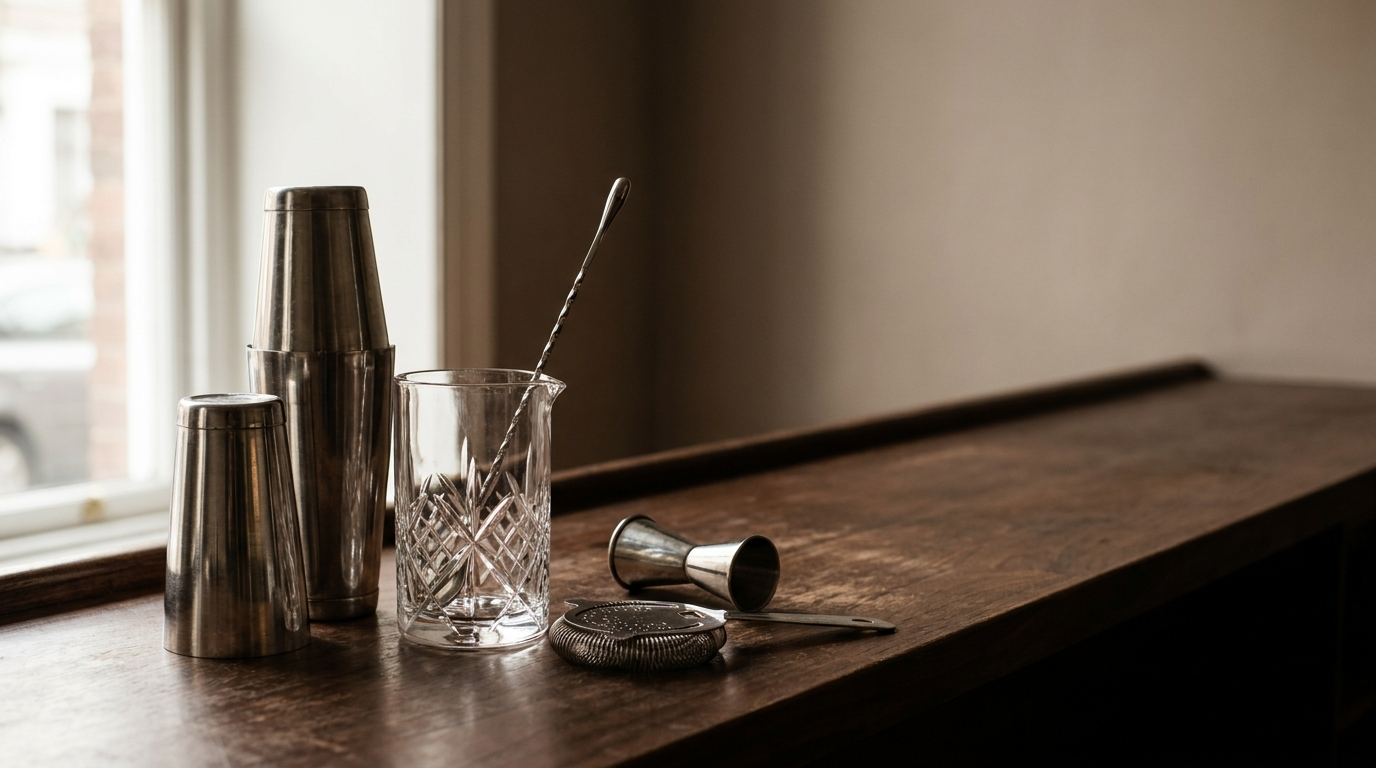
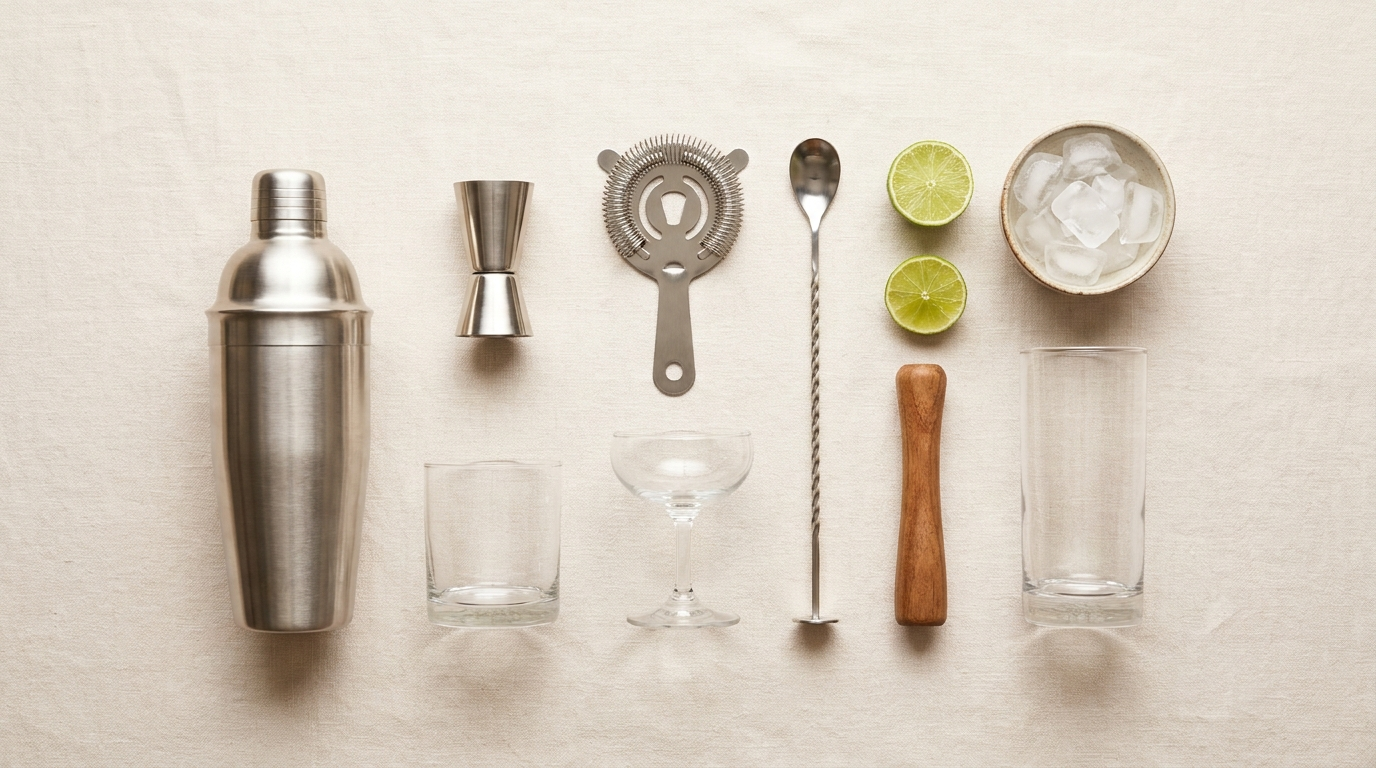
For shaking: a Boston shaker — two tins that you seal together with a tap. Bartenders work faster with one than with a cobbler (the three-piece shaker with a built-in strainer), because it opens more easily and holds more. You will need a separate hawthorn strainer for straining.
For stirring: a mixing glass and a thirty-centimeter bar spoon. The twisted handle lets you rotate the spoon along the side of the glass without stirring through the ice.
Our Speakeasy cocktail sets contain exactly that combination: a Boston shaker, hawthorn strainer, bar spoon, and a Japanese 25/50 ml jigger. They are available in stainless steel, copper, black, and gold.
Three mistakes you can spot immediately
- Shaking for too short a time. Five seconds feels like a long time, but it isn’t. Wait until the tin is covered in condensation.
- Serving over the same ice. Always strain into a clean glass with fresh ice, or into a chilled coupe glass.
- A warm glass. Put your glass in the freezer beforehand, or fill it with ice water while you shake. It makes a bigger difference than you think.
Quick overview
| Cocktail | Technique |
|---|---|
| Martini, Manhattan, Negroni, Old Fashioned, Boulevardier | Stir |
| Daiquiri, Margarita, Whisky Sour, Espresso Martini, Cosmopolitan | Shake |
| Mojito, Caipirinha | Build in the glass (muddle) |
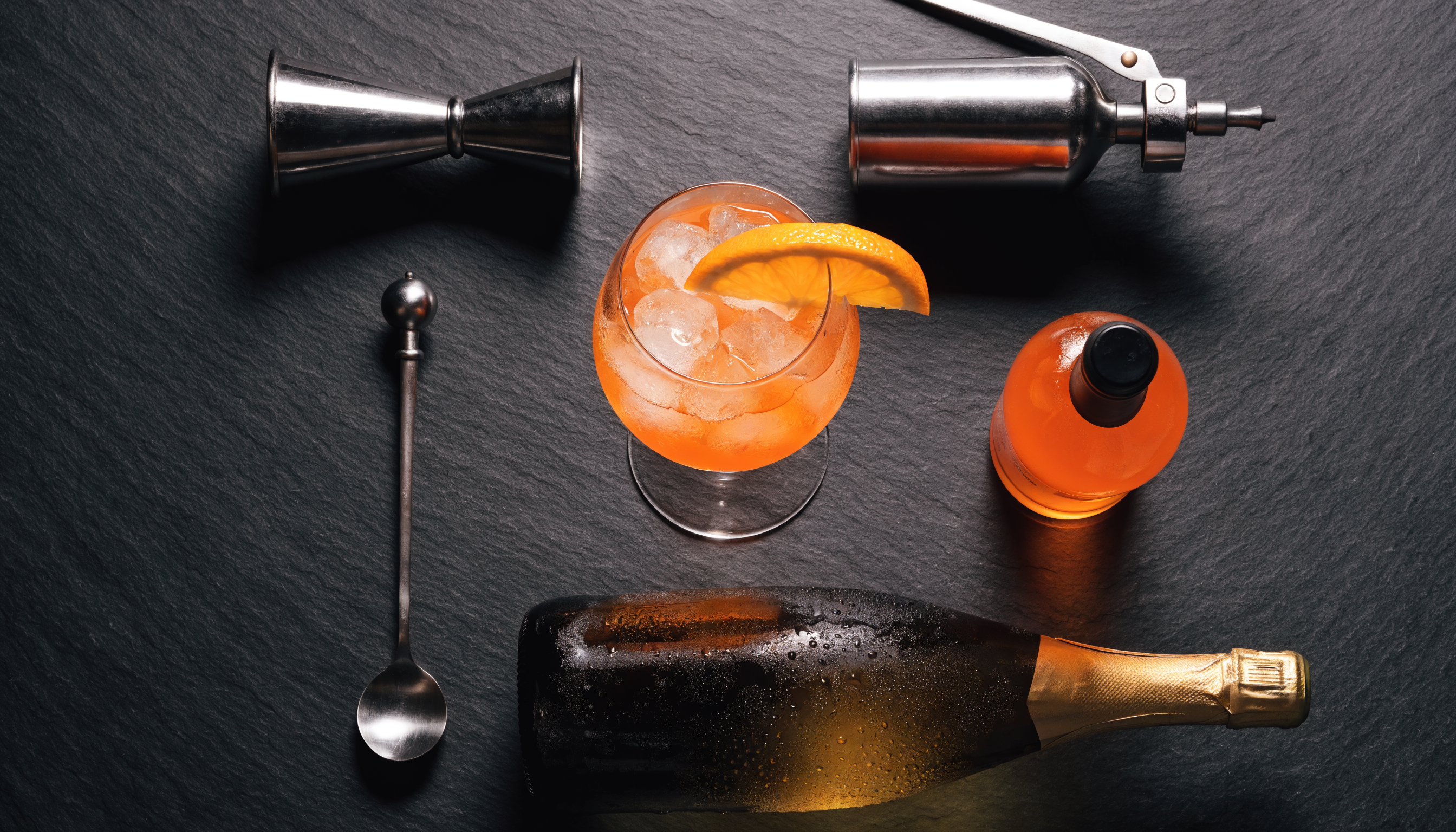
| Aperol Spritz, Gin and tonic | Build in the glass, stir briefly |
Would you also like to know how much of each ingredient to use? Then read Cocktail Ratios: All the Classics Explained in Parts.

Leave a comment
This site is protected by hCaptcha and the hCaptcha Privacy Policy and Terms of Service apply.