

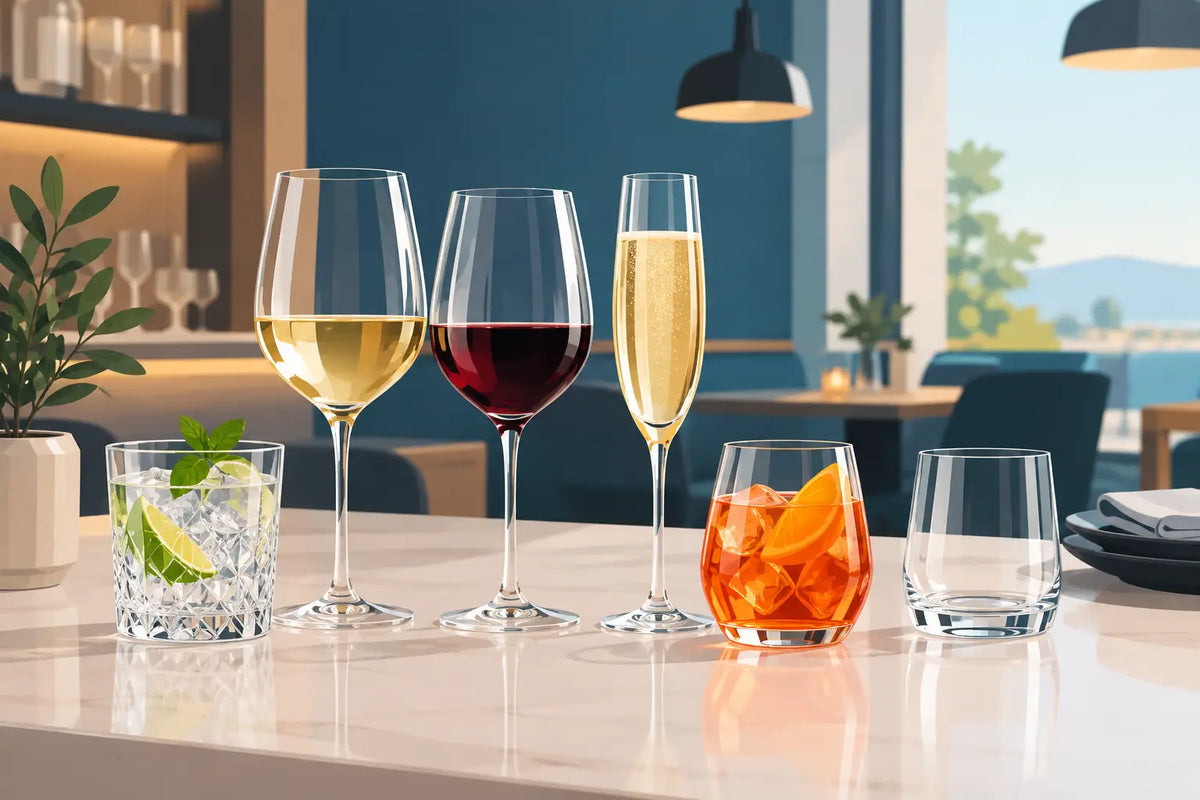
A wine that tastes flat in a glass that’s too small, a cocktail that loses its appeal in a standard tumbler or stacks of glasses that are uncomfortable to hold: these are details guests remember. So when buying glassware for your venue, don’t choose based on price or style alone. Start with your menu and pace, build a compact core collection of water, highball, beer, wine and coffee glasses, then thoughtfully add a few glasses that set your signature drinks apart.
The right glass complements your drinks menu, speeds up service and gives your venue a polished, distinctive look. Below are the choices that make the biggest difference: menu, pour size, workload, serving occasions and ordering.
Buying glassware for your venue starts with your concept
A bustling pub-restaurant has different glassware requirements from a restaurant with an extensive kitchen, a hotel bar or a beach pavilion. In a venue with many covers and a fast pace, sturdy, easy-to-handle glasses are often key. In a wine bar or cocktail concept, shape, experience and presentation can take priority.
First, look at what’s served every day. Do you mainly serve pilsner, soft drinks and coffee? Then beer glasses, highball glasses, tumblers and heat-resistant coffee glasses are the essentials. If wine is the focus, red wine glasses, white wine glasses and a good all-purpose wine glass deserve a prominent place. For a bar with an extensive menu, cocktail glasses, coupes, gin and tonic glasses and sturdy mixing glasses are indispensable.
It’s tempting to buy a separate glass for every drink. That adds flair, but also requires more cupboard space, inventory and attention in the dishwashing area. A carefully planned core collection with a few distinctive glasses for your specials often works better than a cupboard full of models that are rarely used.
Match the size to the pour and the margin
A glass’s capacity partly determines how professional a serving looks. A large wine glass with a small pour can look stingy. A small glass can quickly make a generous serving look messy. So don’t choose based only on total capacity; also consider how much space remains above the drink.
Wine needs that space for its aroma and swirling. For beer, it helps maintain a beautiful head. For cocktails, the right size keeps the garnish, ice and drink from pressing against the rim. Agree on glass capacity and serving size with your team in advance so every table gets the same presentation.
Choose glasses that can withstand the workload
In hospitality, glassware takes a lot of wear and tear. It gets cleared quickly, washed frequently and sometimes placed on trays with little room to spare. An elegant, thin glass can look beautiful, but it's not automatically suited to a busy terrace. The best glass is the one that continues to work well in your day-to-day operations.
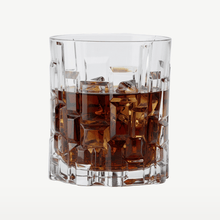
When comparing, look at three things: how balanced the glass feels in your hand, how stable it is on the table and how practical it is in the dishwasher. A wide base keeps it steady on the table, while a glass with a tall, delicate stem requires more attention from the serving staff. Stackable tumblers and water glasses are practical for businesses with limited storage space, but check that they can be stacked without sticking together or getting damaged. For more ways to reduce breakage, read the article on reducing glass breakage in hospitality.
Professional glassware doesn't have to be bulky. Brands such as Chef & Sommelier, Spiegelau, RIEDEL, Royal Leerdam, RCR and La Rochère offer a variety of styles, from refined crystal glass to sturdy models with character. The best choice depends on your concept, not the name on the box.
Factor in breakage, but don't buy based only on replacement cost
A lower price per glass may seem attractive when you need large quantities. But the purchase price is only part of the story. A glass that breaks easily, is difficult to clean or doesn't feel comfortable in the hand ultimately costs you time, stock and guest satisfaction.
So it's better to order a model from a range that's kept as a regular line and is therefore easy to reorder. This prevents your tables from ending up with different ranges that don't quite match after a few months. Also keep a small reserve for peak days, sunny terrace weather and events. The amount you need varies by business, but having enough stock for just one full service is rarely comfortable.
Think in terms of serving occasions, not just glass types
Guests don't see a purchasing list. They experience a moment: a cappuccino at breakfast, a cold specialty beer on the terrace or a glass of sparkling wine at a celebratory dinner. Choosing based on those moments creates a collection that feels cohesive and strengthens your concept.
A clear water glass that also works for fresh juices can add a lot of value to a lunch spot. A drinks menu gains more character with a sturdy beer glass and an attractive glass for a gin and tonic. In a restaurant, a carafe on the table can make all the difference: it feels welcoming, encourages guests to drink water and instantly enhances the look of the table.
Coffee and tea deserve attention too. Double-walled glasses present latte macchiato beautifully and keep hot drinks warm for longer, but are not always the most practical choice for high volumes. A classic coffee glass is often quicker to set out, easier to replace, and more versatile. Above all, choose what works well for your baristas, service staff, and dishwashing team.
Choose a smart core selection for your venue
For many restaurants and cafés, a compact, complete range is more effective than a large collection of individual finds. Start with the glasses you use every day, then add models that strengthen your signature style. Think of a water glass, highball glass, beer glass, universal wine glass, and coffee glass as your daily essentials. Build on that with champagne glasses, specific wine glasses, cocktail glasses, and carafes, based on your menu.
A universal wine glass, for example, is a smart choice when you serve red, white, and rosé by the glass but have limited storage space. Do you have an extensive wine list with different grape varieties and courses? Then it pays to distinguish white wine and red wine more clearly. The same goes for beer: an all-purpose beer glass is efficient, while a distinctive craft beer is better served in a glass that enhances its aroma and foam.
Make sure everything works together. A mix of different styles can be playful, but can quickly look random if the colors, bases, heights, and materials vary too much. Choose a core collection with a clear look, and use standout glasses deliberately as accents for cocktails, desserts, or tasting menus.
Buy hospitality glassware with presentation in mind
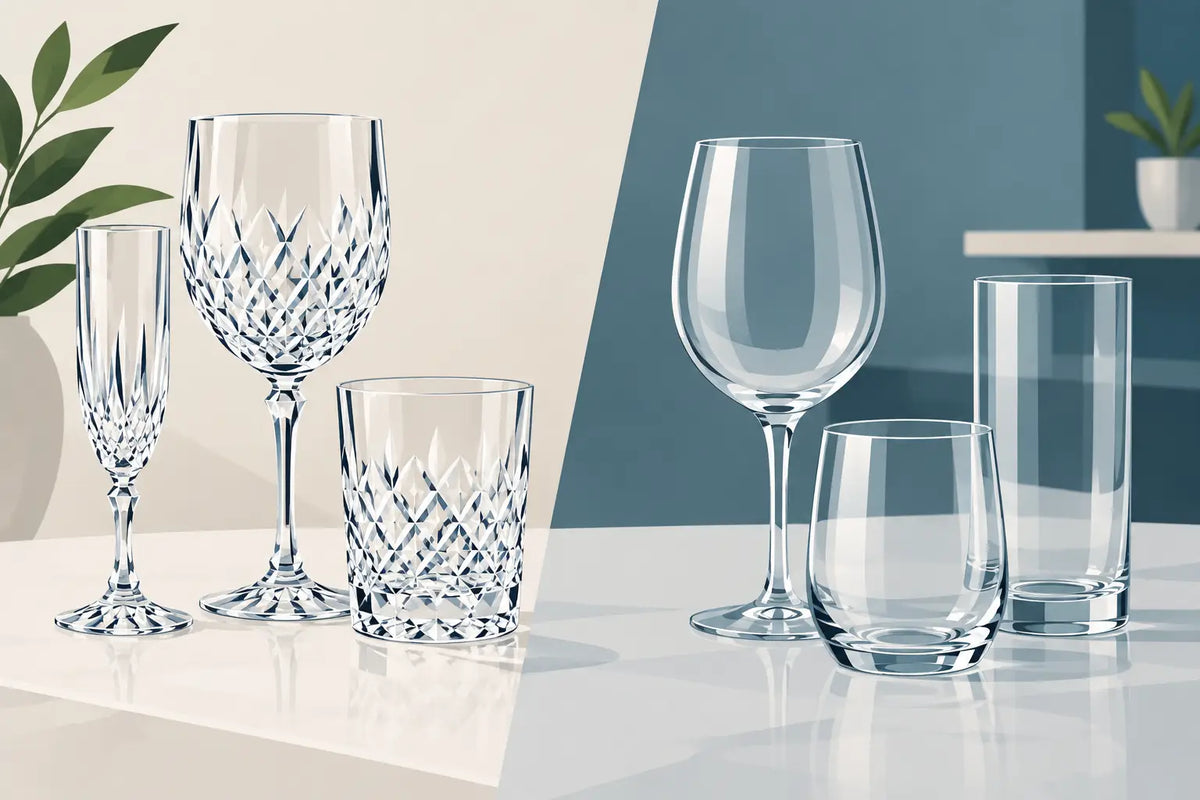
Glassware is part of your table setting and therefore part of your brand experience. Clear, timeless glass goes with almost anything. Cut patterns, textured designs, or colored glass create a stronger atmosphere, for example in a bistro, wine bar, or venue with a distinctive interior. Consider what you serve: a striking glass can elevate a simple cocktail, but may compete with a refined wine presentation.
Finishing touches also make a difference. When receiving glassware, check that the glasses are clear, have no sharp edges, and stand steadily. Then train your team to follow a consistent serving method. Hold wine glasses by the stem or base so the bowl stays clear. Present water glasses, beer glasses, and tumblers clean and free of drips. It may sound obvious, but a carefully polished glass adds value even to a simple drink.
Don't forget the practical look of the table. Too many tall glasses make a table feel cluttered and get in the way of conversation between guests. So alternate tall and short glasses, especially with an elaborate place setting. A low tumbler next to an elegant wine glass and a suitable carafe usually creates a more harmonious look than three tall glasses side by side.
Ordering for hospitality without unnecessary risk
Buying glassware online should feel straightforward, even when you're ordering larger quantities. Check each model's capacity, dimensions, material, and whether it's dishwasher-safe. Then work out how many glasses you need per table, per cover type, and during your busiest service. Always add some spares.
If in doubt, first order a small quantity to test the glass in your own setting. Does it fit on your tray? Does it work in the glasswasher? Does it feel comfortable in your hand? And does it match your tableware, cutlery, and table layout? A trial setup during a quiet service prevents a large order that the team later has to work around.
At Glazen.nl, you'll find glassware for everyday hospitality use and for occasions where presentation matters even more, with the specifications you need to compare each model. Feel free to request a quote for larger quantities.
A good glass doesn't need to demand all the attention. It should do exactly what your guest expects: feel comfortable to hold, showcase the drink, and make your service effortless. Choose with that in mind, and every poured drink will feel that little bit better.
Frequently asked questions
How many glasses does a hospitality business need per cover?
A common rule of thumb is to have two to three times the number of glasses you use at once during peak hours. After all, glasses are also in the dishwashing area, on trays, or behind the bar. For a terrace or a venue with quick table turnover, you may need a higher ratio.
Which glasses does a restaurant need at minimum?
With a water glass, a highball glass, a beer glass, a universal wine glass, and a coffee glass, you can cater to most of a typical menu. Add champagne, cocktail, and specialty beer glasses once those drinks are actually on your menu. This keeps the dishwashing area and storage organized.
Is thinner glass less suitable for the hospitality industry?
Not necessarily. Many thin-walled ranges are specifically designed for professional use and are highly resistant to commercial glasswashers. More important than wall thickness are the rim finish, the stability of the base, and how your team clears and washes the glasses.






Leave a comment
This site is protected by hCaptcha and the hCaptcha Privacy Policy and Terms of Service apply.