

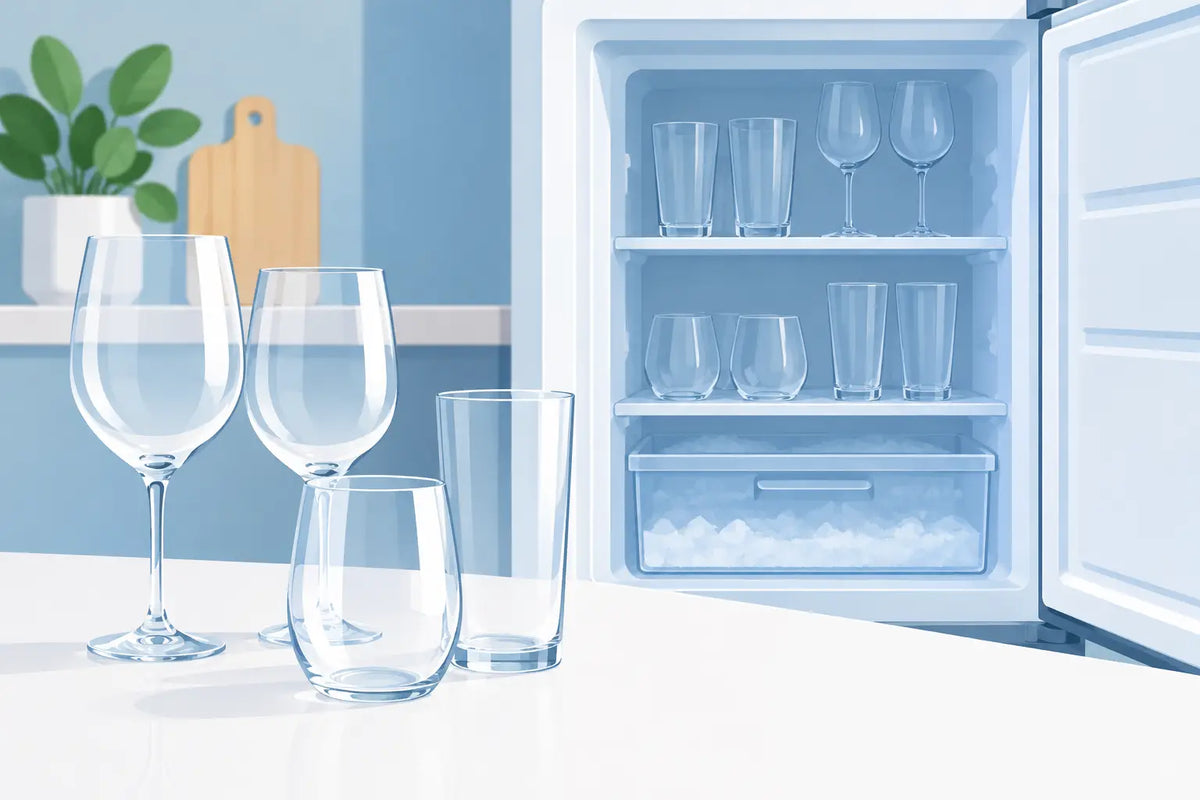
An ice-cold beer glass, a coupe for a refreshing cocktail, or highball glasses ready for a summer get-together: handy, but can glasses actually go in the freezer? Often, yes, as long as the glass is clean, dry, and at room temperature, and you don’t leave it there for more than 15 to 30 minutes. Glass can handle the cold just fine, but it’s much less resistant to sudden temperature changes.
Putting a glass straight from a hot dishwasher into the freezer is asking for trouble. Let the right type of glass cool down gradually, and you’ll keep your favorite glasses looking good and your drink at the right temperature. Below, you’ll learn which glasses can handle it, how to do it safely, and when another cooling method is a better choice.
Can glasses go in the freezer? It depends on the glass
Not every drinking glass is made for the freezer. Regular clear glass, tempered glass, and crystal glass differ in composition, thickness, and finish. A sturdy glass from the highball glasses collection can often withstand more than a very thin wine glass with a delicate stem. Still, even a thick glass isn’t automatically freezer-safe.
The biggest culprit is thermal shock. This happens when the glass’s temperature changes so quickly that different parts of the material contract unevenly. The resulting stress can cause a tiny crack or make the glass break unexpectedly. Sometimes it happens right away; other times, you only notice a small crack near the rim or base later.
So always check the manufacturer’s product information first. If it explicitly says a glass is freezer-safe, you can follow that advice. If not, handle the glass with care. Dishwasher-safe doesn’t automatically mean a glass is freezer-safe, though. Those are two very different tests.
Which glasses are best kept out of the freezer?
Thin wine glasses, champagne flutes with long stems, and handmade glasses are the most fragile. It’s also best to keep glasses with decorations, colored coatings, gold rims, or painted designs out of the freezer. The cold can damage the finish, especially if the glass is rinsed or filled immediately afterward.
Lead crystal and very fine crystal need extra care. These glasses are beautiful for wine, champagne and a festive dinner, but aren't intended as chilling accessories. Instead, use one of the wine coolers, an ice water bath or a chilled carafe when you want to lower the serving temperature.
Sturdy glasses from the tumbler glasses collection, thick beer glasses and some cocktail glasses are generally a safer choice, provided they're fully at room temperature. But here, too, the product instructions take precedence. Not sure? Chill them in the refrigerator instead. It takes longer, but is much gentler on your glassware.
How to safely chill glasses in the freezer
Still want to have a few glasses ice-cold and ready? Make sure they're clean, dry and at room temperature. A glass that's still warm from the dishwasher or has just been rinsed with hot water should never go straight into the freezer. Let it cool completely first.
Place the glasses upright on a stable, level surface. Leave some space between them and make sure they don't touch each other, an ice cube tray or a freezer drawer. A slight knock against frozen items can be enough to damage a delicate rim. Also, don't place them against the back wall of the freezer, where the cold is often most intense.
For most drinking glasses, 15 to 30 minutes is enough. You want to chill the surface, not leave the glass in the freezer for hours. Then take the glasses out gently, and don't fill them with boiling-hot or very warm drinks. Even sturdy glassware doesn't handle that combination well. For cold beer, soda, water or a gin and tonic, a pre-chilled glass works perfectly. Fill it just before serving so the drink doesn't dilute unnecessarily quickly due to condensation or ice forming on the outside.
A quick method for cocktail glasses
For a martini, a daiquiri or another cocktail in a coupe or martini glass, the freezer isn't always necessary. Fill the glass with ice cubes and cold water while you shake. Let it sit for a few minutes, then pour it out once the cocktail is ready. The glass will be nicely chilled, without the extreme cold of a freezer. The clearer your ice, the more slowly it melts; in ice cubes and ice accessories, you'll find molds designed for that.
This method works especially well for elegant glasses from the cocktail glass collection that you would rather not leave in the freezer for long. It also gives you more control: the glass is cold enough for a refreshing first sip, but not so cold that the aromas disappear completely.
Not every drink is better in a frozen glass
An icy glass looks appealing, but serving temperature also affects what you taste. A lightly chilled glass can be pleasant for beer, especially on a hot day. A heavily frosted beer glass is less ideal for many specialty beers: the head can collapse faster, and the cold dulls aroma and flavor. It can work well for a refreshing pilsner, but for a distinctive IPA, tripel, or stout, a clean glass at the right beer temperature is often better.
This is even more important for wine. A white wine glass from the freezer can make the wine too cold, so fruity notes and aromas don't come through as well. Red wine loses its character quickly in an ice-cold glass, too. It's better to chill the bottle or carafe and use a suitable wine glass at room temperature.
Cocktails are different. A coupe, martini glass, or small tumbler should be thoroughly chilled, since cocktails are often served without ice. The pre-chilled glass keeps the drink at temperature longer and prevents your carefully prepared cocktail from warming up too quickly. For long drinks with plenty of ice, a glass at room temperature is usually enough.
Common mistakes that cause breakage
The problem is rarely just the freezer. Often, it's the transition before or after. Freezing a warm glass, rinsing a frozen glass under hot water, or filling an ice-cold glass with hot tea are classic situations in which glass comes under stress.
Moisture also deserves attention. A little condensation is no problem, but don't put glasses with a layer of water on the bottom in the freezer. The water can freeze the glass to the surface. If you try to pull it loose, the stem or base may get damaged. So dry each glass carefully before putting it down.
Don't use the freezer as a permanent storage place for your finest glassware either. Prolonged cold offers no benefit and increases the risk of knocks, tipping over, and freezing in place. A supply of sturdy glasses for busy times can easily be chilled briefly. It's better to store your special wine glasses, coupes, and decanters safely in the cupboard.
For home and hospitality: chill smartly without surprises
At home, a set of chilled highball glasses is ideal for a barbecue, movie night, or cocktail evening. In the hospitality industry, speed and repetition are more often the priority. In that case, it's a good idea to agree on a set procedure in advance: chill only selected, sturdy glasses, limit the chilling time, and always leave enough room in the freezer.
For bars and restaurants, a refrigerated storage cabinet or a chilled glass cabinet can be a more consistent solution than a full freezer. You'll have a clearer overview, avoid storing glasses next to food products, and reduce the risk of collisions. The article on what you really need for your home bar explains which glasses you should have on hand before you even think about chilling them.
A cold glass can make a drink feel extra festive. Do it carefully: choose a suitable glass, chill it briefly and gently, and let the temperature enhance your drink's character rather than hide it.
Frequently asked questions
How long can a glass stay in the freezer?
Fifteen to thirty minutes is enough for most drinking glasses. You want to chill the surface, not leave the glass to freeze through for hours. Set a timer if needed, because a forgotten glass among the frozen food is much more likely to get knocked or develop a small crack.
Can you put a wine glass in the freezer?
Not recommended. Thin wine glasses and champagne flutes with long stems are especially vulnerable to thermal shock, and a glass that's too cold also dulls the wine's aromas. Instead, chill the bottle or decanter, and use a wine glass at room temperature.
Why does a glass break in the freezer?
Almost always due to a temperature change that happens too quickly. If one part of the glass cools or warms faster than the rest, the material contracts unevenly and stress builds up. Putting a warm glass in the freezer or rinsing a frozen glass with hot water are the two classics; moisture frozen under the base is the third.






Leave a comment
This site is protected by hCaptcha and the hCaptcha Privacy Policy and Terms of Service apply.