

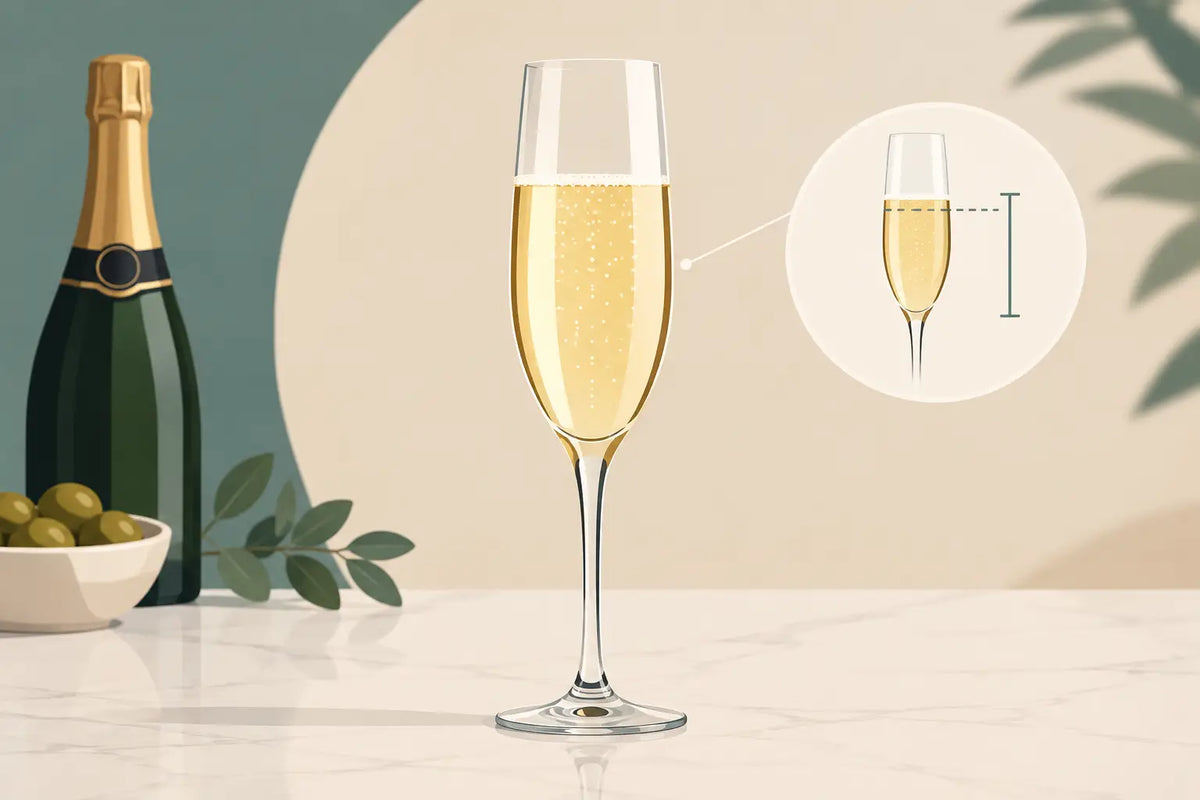
A bottle of champagne is chilling, the glasses are ready, and then comes the practical question: how many milliliters are in a champagne glass normally? The short answer: most champagne glasses hold 180 to 300 ml, but you rarely fill them to the top. For beautiful bubbles, a festive look, and enough room for the mousse, 100 to 125 ml per glass is usually just right.
The difference between capacity and serving size matters more than you might think. An elegant glass can look large, but it is designed to give the champagne air and room. This helps the aromas, flavors, and bubbles come through better.
How many milliliters does a champagne glass hold?
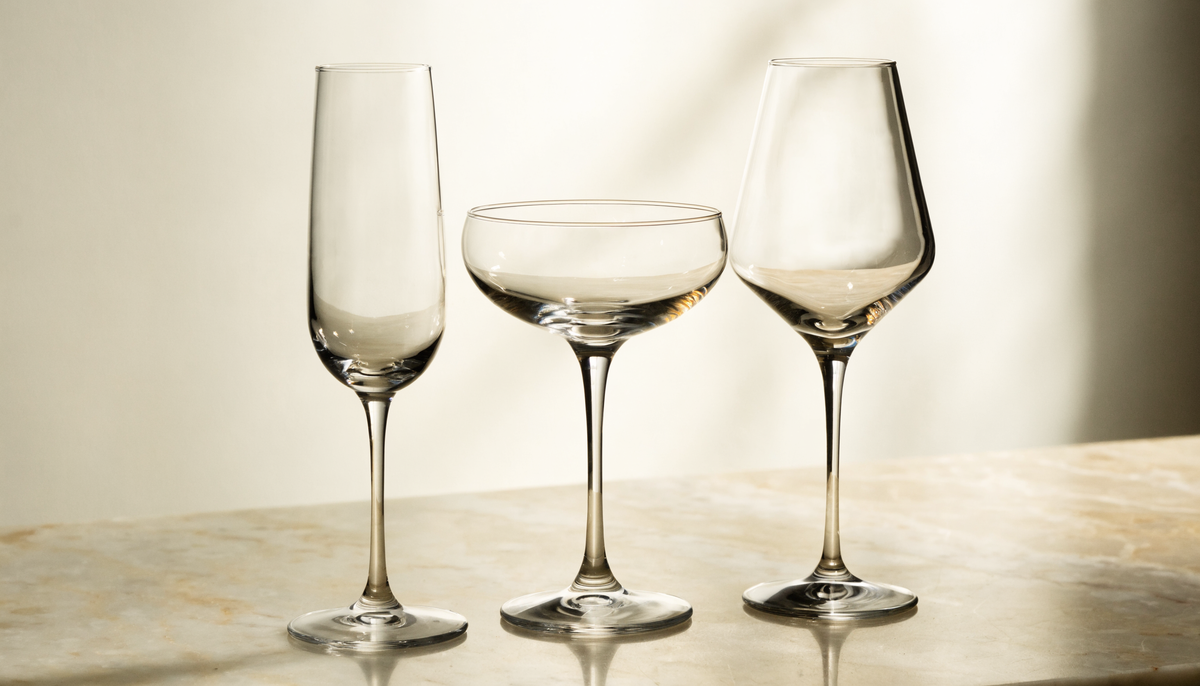
A classic champagne glass usually holds between 180 and 240 ml. This size is common for flûtes: the tall, narrow glasses instantly recognizable on festive tables, at weddings, and at parties. A tulip-shaped champagne glass often holds a little more, usually between 250 and 350 ml. Coupe glasses vary widely, but often hold 200 to 300 ml.
So the total capacity does not tell you how much champagne to pour. It’s best to fill a champagne glass about one-third to half full. In a flûte, that works out to around 100 to 125 ml. In a roomier tulip glass, 125 to 150 ml can be just right, especially if you want to take your time tasting the champagne rather than simply raising a toast.
An overfilled glass is less practical. The bubbles have little room, the glass warms up more quickly in your hand, and spills are more likely. A modest pour often looks more elegant, too.
The capacity of each type of champagne glass
The best size depends on the occasion and the champagne you’re serving. For a quick toast, appearance often matters most. If you’re serving a fine vintage champagne or an elegant crémant with dinner, you’ll also want to give the aromas and flavors enough room to develop.
Flûte: usually 180 to 240 ml
The flûte is slim, tall, and festive. Its narrow opening keeps the bubbles visible and lively for longer. This glass is a popular choice for prosecco, cava, and champagne at a reception or birthday party.
Pour about 100 ml into a flûte for an aperitif. If you’d like a more generous pour, 125 ml is a good amount. Don’t fill the glass to the brim: the rising mousse needs room, and the stem is more comfortable to hold.
Coupe: usually 200 to 300 ml
The coupe has a wide, shallow bowl and gives any occasion a distinct retro look. Think of a festive cocktail evening, a dessert with champagne, or a tower of glasses at a special celebration.
For champagne on its own, a coupe is mainly a stylish choice, not necessarily the best for capturing aromas. Its wide surface makes the bubbles disappear more quickly. So pour smaller servings of 75 to 100 ml and top up as needed. The coupe is perfect for champagne cocktails, such as a French 75.
Tulip glass: usually 250 to 350 ml
A tulip-shaped champagne glass is slightly wider at the bottom and tapers gently toward the top. This gives the wine more contact with oxygen while helping to retain its aromas in the glass. For anyone who wants to truly smell and taste their champagne, this is often the best option.
The bowl is larger, but that doesn’t mean you have to pour more. Allow 125 ml per glass, or up to 150 ml for an extended tasting or a course served at the table. The extra space above the wine is part of the experience.
How many glasses can you pour from one bottle of champagne?
A standard bottle of champagne contains 750 ml. The number of glasses depends entirely on the pour size. At 100 ml per glass, you can pour seven full glasses from a bottle, with a little left over. At 125 ml, you’ll get six glasses. If you pour 150 ml, you’ll get five glasses.
For a party, six glasses per bottle is a safe and practical guideline. It makes for a festive pour without seeming stingy. If you’re organizing a toast for a large group, 100 ml per person works well. If champagne will be served with dinner or you want guests to be able to have a second glass, allow for more.
A magnum holds 1.5 liters, enough for about twelve 125 ml glasses. It’s handy for larger groups and makes a real centerpiece on the table. Just remember that you’ll need a larger cooler and a sturdy glass that’s easy to pour into.
Which size should you choose for home, hospitality, or a gift?
For home use, a set of flûtes holding around 200 ml is an easy all-around choice. They’re festive without taking up much space and work well for prosecco, cava, and champagne. If you often host leisurely dinners or enjoy tasting different sparkling wines, you’ll get more out of a 300 ml tulip glass or larger.
In hospitality, the choice is about more than presentation: speed, ease of use, and consistent pours matter too. A glass with a capacity of 210 to 250 ml often offers enough room for a neat 100 or 125 ml serving. That makes it easy to keep track of pours and maintain a consistent presentation at every table.
If you’re giving glasses as a gift, don’t just consider the number of milliliters. The shape, weight, stem length, and occasion matter just as much. An elegant set of flûtes is a safe gift for a wedding or housewarming. A set of tulip glasses feels more luxurious for someone who enjoys tasting wine and champagne.
How to pour champagne without the mousse overflowing
Chill the bottle well in advance, ideally to around 8 to 10 degrees. Hold the glass at a slight angle and pour gently down the inside. Let the first foam subside briefly before continuing to pour. If you pour quickly and straight down, the mousse can rise rapidly, leaving you with less in the glass and sticky glassware.
Hold the champagne glass by the stem or base, not the bowl. This keeps the champagne cool for longer and prevents fingerprints on clear glassware. If you’re serving several kinds of sparkling wine, use the same type of glass for everyone. It looks neat and makes serving sizes easier to compare.
Frequently asked questions about champagne glass capacity
Is 200 ml enough for a champagne glass?
Yes. A 200 ml champagne glass is an excellent size for most occasions. It comfortably holds 100 to 125 ml, with enough room for bubbles and aromas. A flûte of this capacity is especially versatile for parties and holidays.
Why is a champagne glass larger than the amount you pour?
The empty space above the champagne helps the mousse, aromas, and flavors come through better. This space is especially valuable in a tulip glass, where it also helps capture the wine’s aromas. A large glass doesn’t mean you have to fill it.
Can I serve prosecco in the same glass?
Absolutely. Flûtes and tulip glasses are both suitable for prosecco, cava, and crémant. If you’re mainly after fresh bubbles and a festive effect, choose a flûte. If you want to explore the aromas and flavors, a tulip-shaped glass is the best choice.
At Glazen.nl, you’ll find champagne glasses in a variety of shapes and capacities, from a classic flûte for a toast to a roomy tulip glass for dinner. Choose a size that suits the way you pour: a glass that feels comfortable in your hand and leaves room for the bubbles makes every pour a celebration.


Leave a comment
This site is protected by hCaptcha and the hCaptcha Privacy Policy and Terms of Service apply.