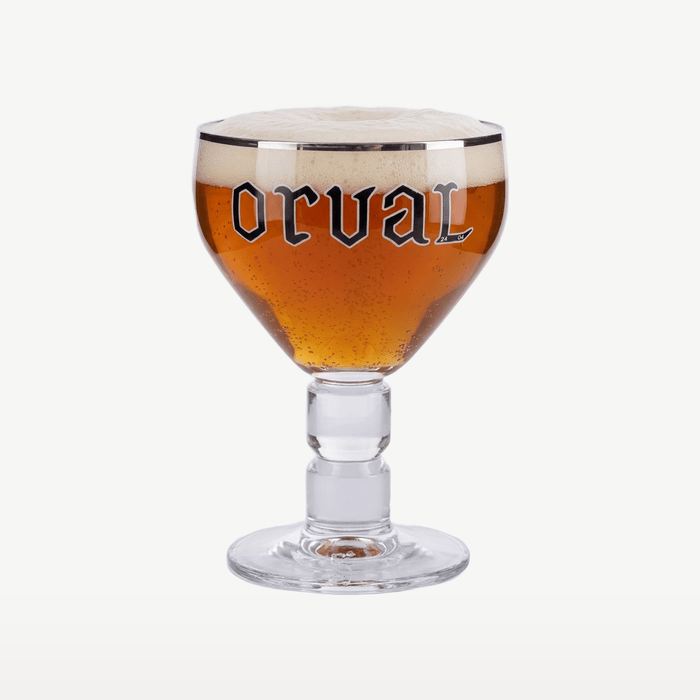
Orval Beer Glass 33 Cl - Gift Box
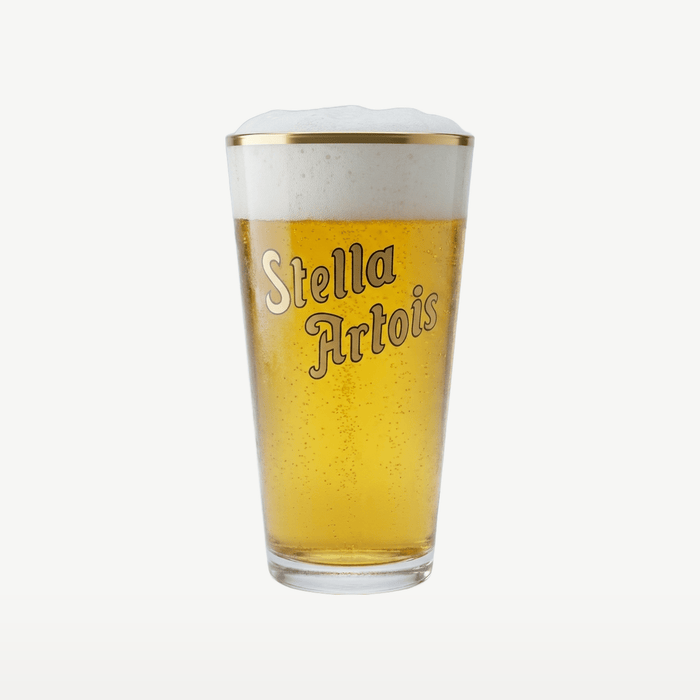
Stella Boerke Beer Glass 33 Cl - Gift Box - 4 Pieces
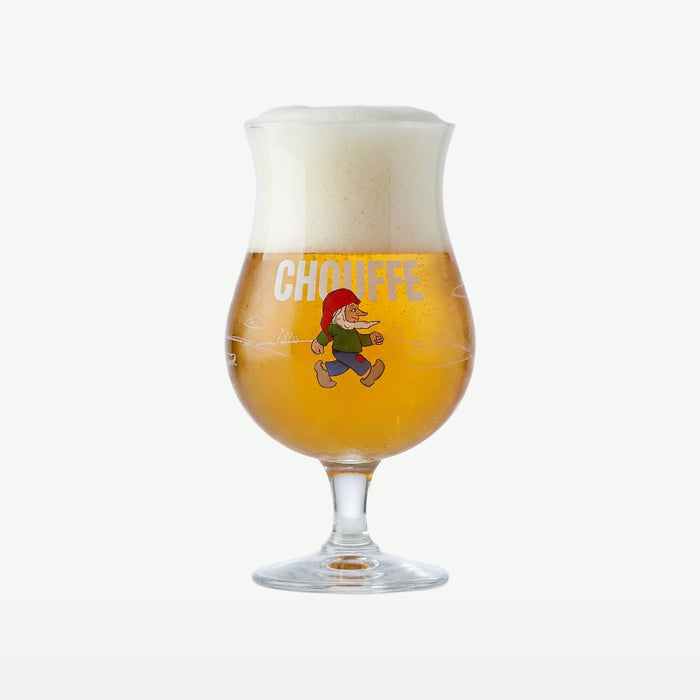
La Chouffe Beer Glass 33 Cl - Gift Box
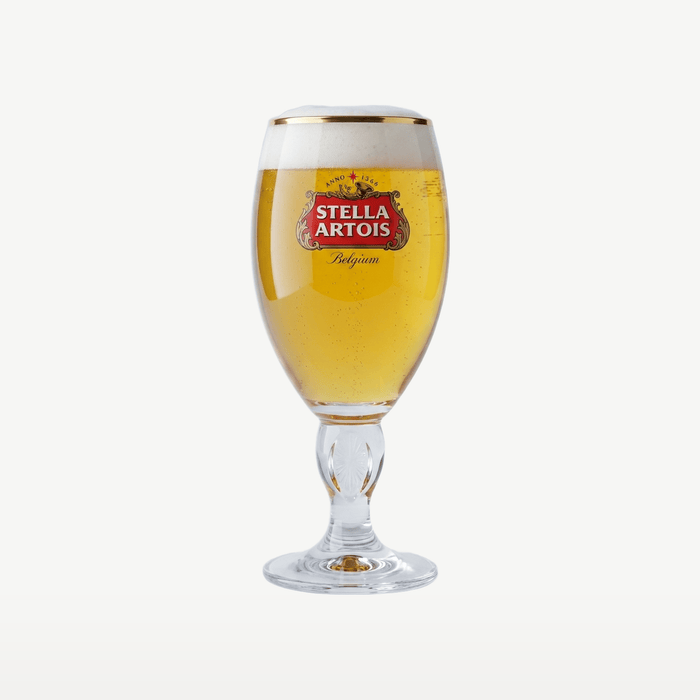
Stella Beer Glass 25 Cl - Gift Box

How to pour
a tripel in
Rinse the glass with cold water and shake it out, but don’t dry it. A wet, grease-free surface lets the head build evenly, while grease from a tea towel or traces of rinse aid will break down the foam.
Hold the glass at an angle of about forty-five degrees and let the tripel run down the side. This releases less carbonation at once than pouring straight onto the bottom, which helps with a beer that has refermented in the bottle.
Set the glass upright when it’s two-thirds full and pour into the center. This time, release the carbonation so a two-finger head forms and holds the spicy yeast notes above the beer.
Hold the bottle upright at the end and leave the last little bit of yeast sediment behind, or deliberately pour it in if you want the beer cloudier and fuller. Don’t level off the head: it should stay high in the glass for a tripel.
What did you think of this explanation?
One click on a star is all it takes. If you’d like to add a comment, we’ll review it before it appears here.
Save this page
Send this page to your own email so you have the information at hand when you're ready to pour. You'll also get a €5 discount code on orders over €50 for the matching glasses.
The story
The names single, double, and Tripel say something about the strength within a brewery, not about a fixed standard. A brewer who puts three beers side by side uses them to distinguish the lightest, the middle, and the strongest. There is no rule defining what percentage a beer must reach to be called a Tripel, which is why Tripels from different breweries can vary considerably. What they have in common is their composition: pale malt for the light color, candy sugar that ferments almost completely and therefore adds alcohol without extra body, and bottle conditioning that creates the dense head and spicy yeast notes.
The right glass
A Tripel calls for a glass that narrows slightly towards the top: a tulip or a stemmed goblet. This shape keeps the spicy and fruity yeast notes above the beer instead of letting them fade away, while the stem keeps your hand away from the contents, so an 8-degree beer doesn't warm up in a minute. Aim for a capacity of 38 to 40 cl, because there needs to be room for a two-finger head on top of the 33 cl from the bottle. If you're looking for the official branded glass from a particular brewery, take a look at the Belgian beer glasses.

Arcoroc Cervoise Beer Glass 38 cl (6 pieces)

Onis Munique Beer Glass 40 cl on Foot (6 pieces)
Both sets together € 60,90.
The right tools
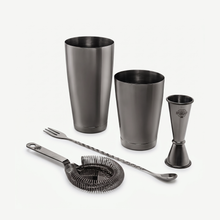
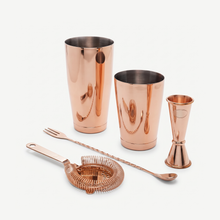
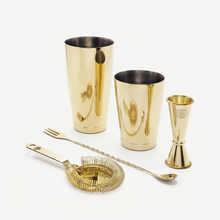
Strictly speaking, all you need alongside a Tripel is a bottle opener, and we don't sell those. If you want to measure out a pour of spirits precisely, grab a jigger, and use a bar spoon to gently layer one drink on top of another. These are the bar tools we use ourselves; find them all in our bar tools & cocktail sets.


Glass set (our choice 01) + 2 bar tools together € 56,85.
What do you serve alongside?
The tripel takes center stage; these are the bottles that can join it on the table. Genever is the closest match for its spicy yeast notes. Well-known bottles include Bokma and Beerenburg. Each drink page tells you the alcohol percentage, what it tastes like, which cocktails it works in and what glass you need.


Variations & twists
There’s quite a difference within the same family. A blond at 6 to 7 percent is lighter and drier, a dubbel is dark and malty, and a quadrupel goes well beyond that. Leave a tripel in the bottle for a year and it will become less sharp, with the fruit coming through more. Pour it cloudy, including the yeast sediment, and you’ll taste more cloves and banana. Want to read more? Explore all drinks and brands.
Serving tip
Take the bottle out of the fridge half an hour before serving; between 8 and 12 degrees, the spicy notes open up, while very cold temperatures leave little of them. Don’t leave the glass in the sun in the meantime, as a tripel warms up quickly in a thin-walled glass. Olives or aged cheese go well with it.
Good to know
Where does the name tripel come from?
It comes from the order of beers within a brewery. Single, double and tripel indicate which beer is the lightest, middle and strongest in a series. There’s no fixed standard, so one brewery’s tripel can be very different from another’s.
Why is a tripel so light in color?
It’s the malt. A tripel is brewed with pale malt that has barely been roasted, and the extra alcohol comes from light candi sugar rather than dark malt. This keeps the beer golden blonde while still giving it plenty of strength.
What does candi sugar do in the beer?
It ferments almost completely. The yeast converts the sugar into alcohol, leaving little residual sweetness and little body. This lets you brew a beer with 8 to 9.5 percent alcohol that still feels rounded and easy to drink instead of thick and sticky.
What is bottle conditioning?
During bottling, some yeast and a little sugar are added to the bottle. The yeast continues to work there, producing carbonation and a fine, dense head. The layer you see at the bottom of the bottle is yeast sediment; you can leave it behind or deliberately pour it into your glass.
How cold should you serve a tripel?
Between 8 and 12 degrees. Colder temperatures mute the aroma, leaving little of the pepper, cloves and banana; above twelve degrees, the alcohol comes through too strongly.
Frequently asked questions
What glass do you use for a tripel?
A tulip glass or a stemmed goblet holding 38 to 40 cl. The tapered shape keeps the spicy and fruity yeast notes above the beer, while the stem keeps your hand away from the liquid so the beer doesn't warm up too quickly. The glass should leave room for 33 cl of beer plus a two-finger head.
How much alcohol is in a tripel?
Usually 8 to 9.5 percent. There's no standard that defines this, so you'll also find tripels just below or above that range. Because of their light color and rounded flavor, they're often less noticeable in strength than you'd expect.
What's the difference between a tripel and a dubbel?
The color and the sugar, not just the strength. A tripel uses pale malt and light candi sugar, staying golden blonde; a dubbel uses dark malt and dark candi sugar, turning dark brown with notes of caramel and dried fruit. A dubbel is also lower in alcohol, around 6 to 8 percent.
Pour in the yeast sediment?
That's up to you. If you leave the sediment in the bottle, the beer stays clear and tastes a little crisper. Pour it in too, and the tripel turns cloudy, bringing out the spicy yeast notes.
Buy tripel
Want the bottle delivered straight to your door? Order tripel online at Gall & Gall. Gall & Gall has 34.
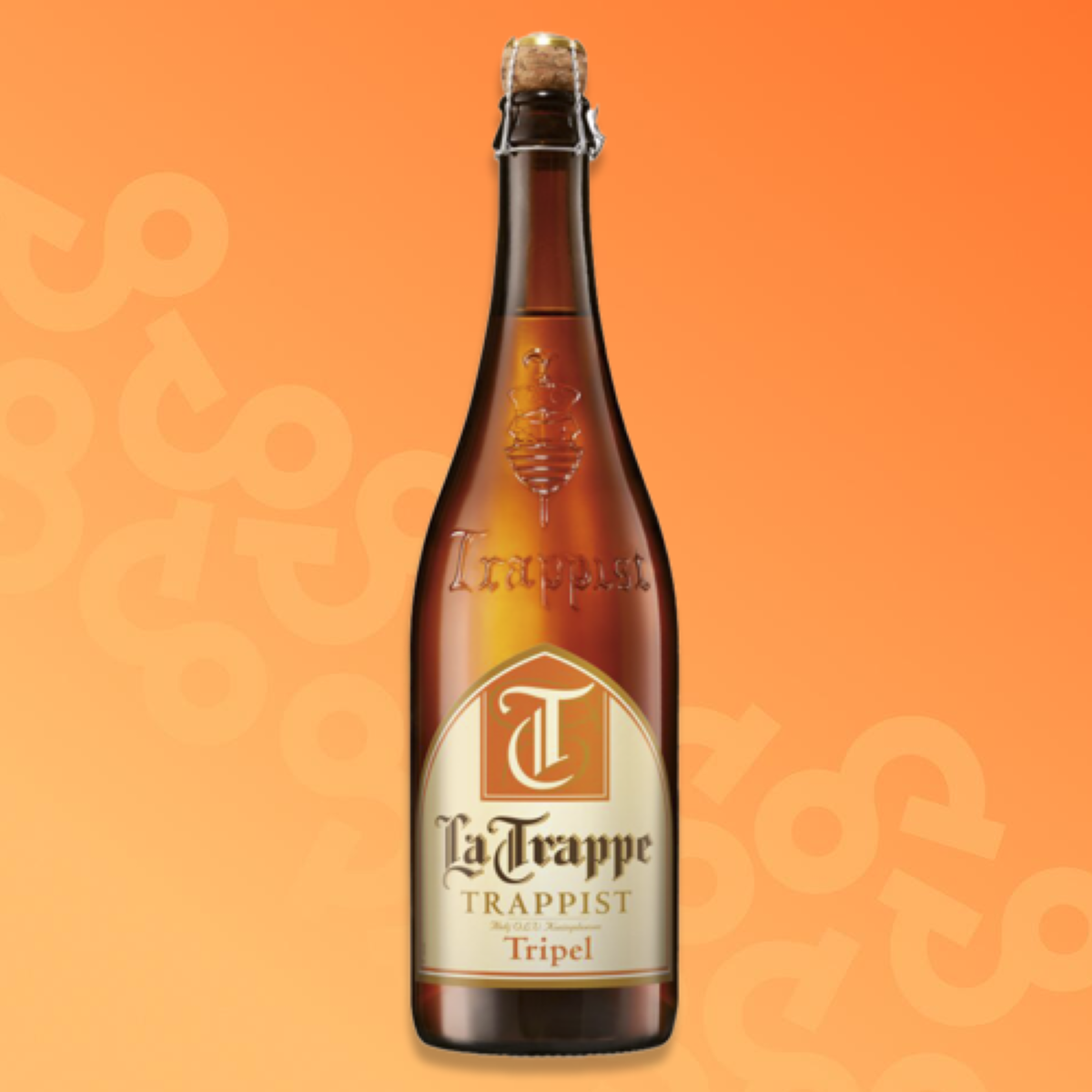
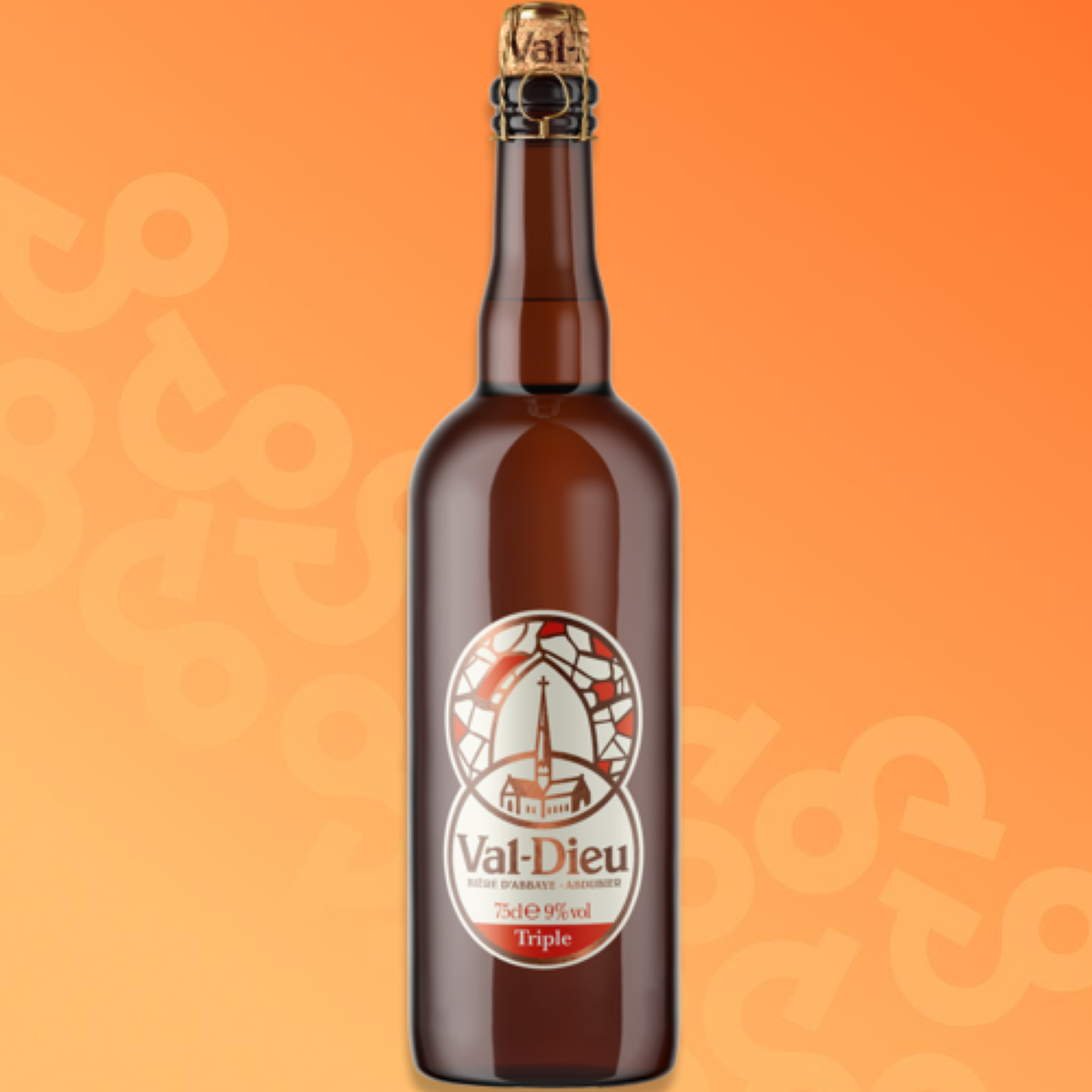
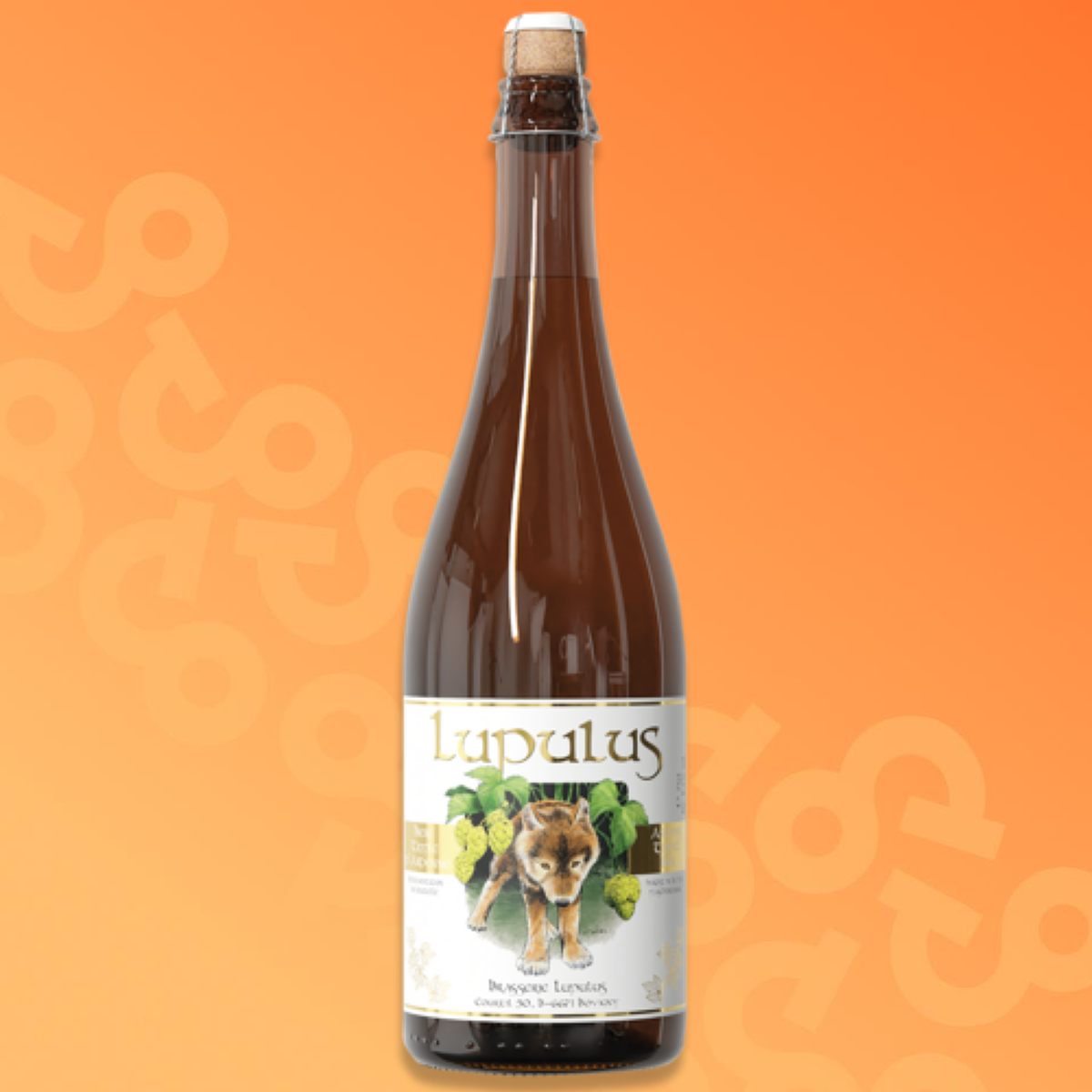
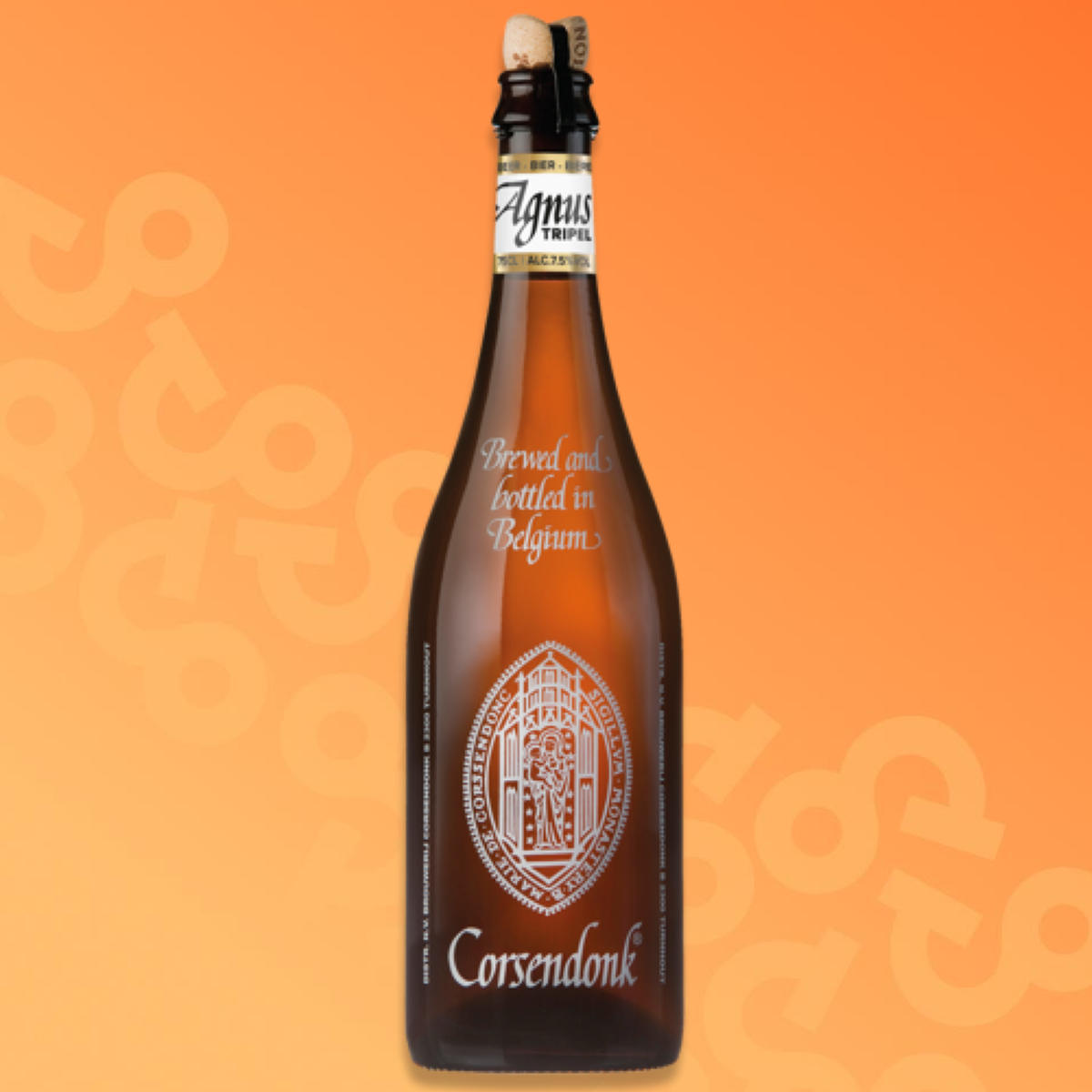
Prices as of November 19, 2026, as provided by Gall & Gall. See the current price and stock at Gall & Gall. Glazen.nl receives a small commission if you buy something through these links; it doesn't cost you anything extra. No alcohol for under-18s.
Everything for your bar,
at one address
Hospitality-quality glasses, sold in sets. Order today, delivered quickly.
Shop for the glasses →