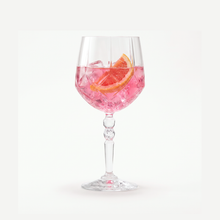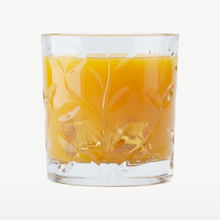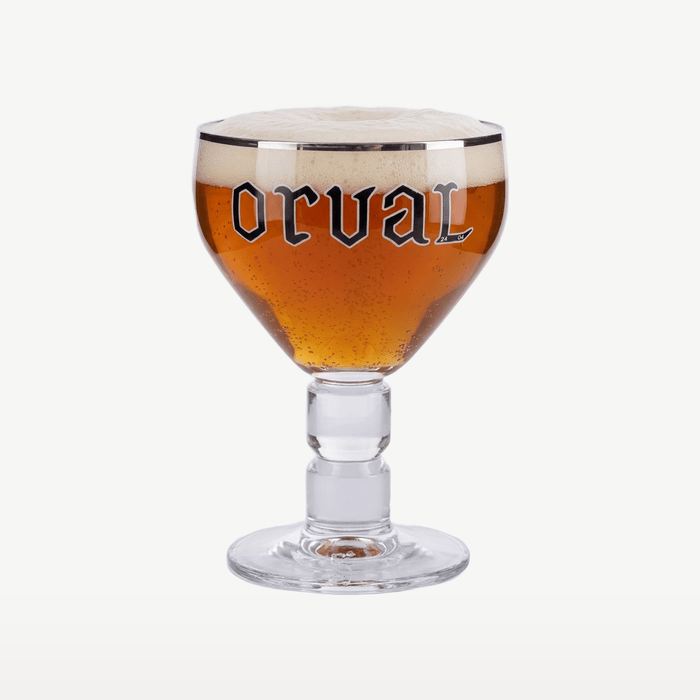
Orval Beer Glass 33 Cl - Gift Box
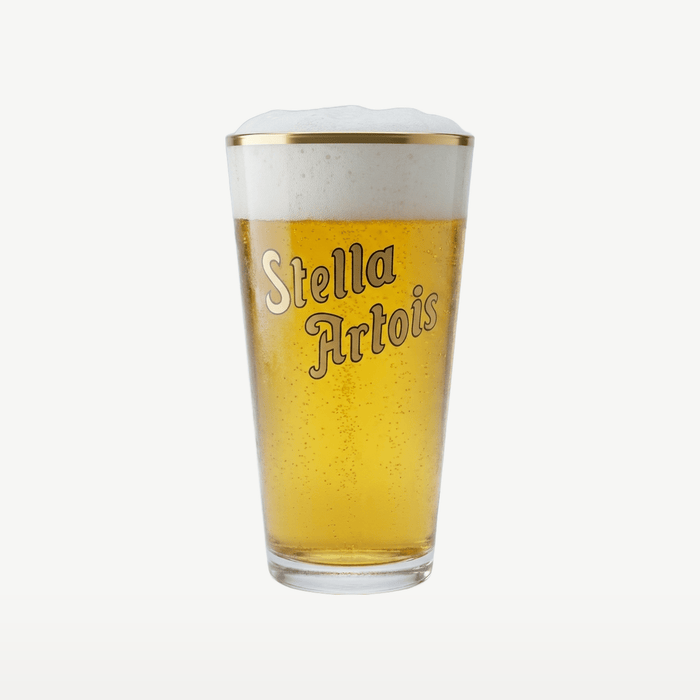
Stella Boerke Beer Glass 33 Cl - Gift Box - 4 Pieces
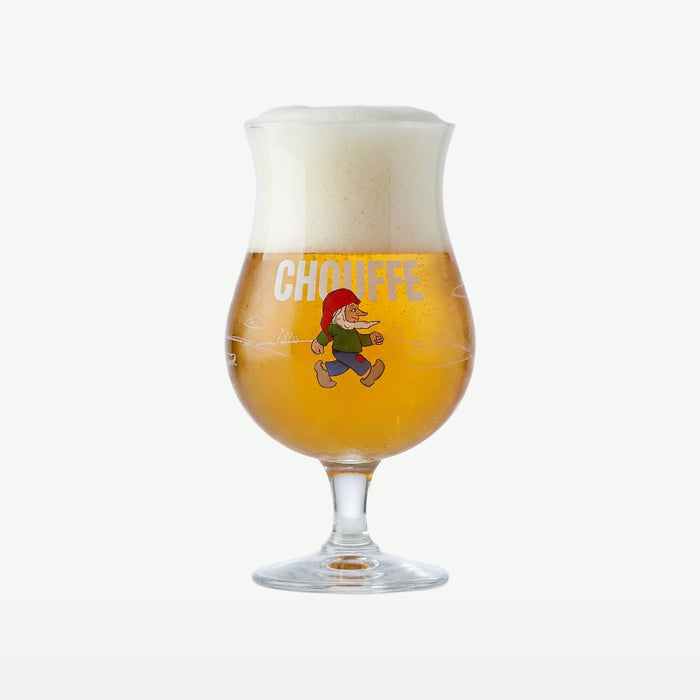
La Chouffe Beer Glass 33 Cl - Gift Box
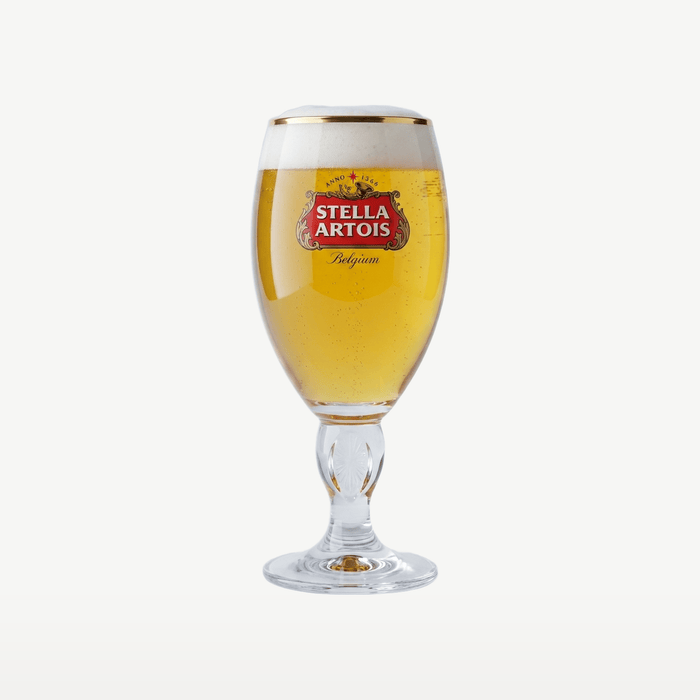
Stella Beer Glass 25 Cl - Gift Box

How to pour it
a lambic in
Rinse the glass with cold water and shake it out without drying it. A grease-free surface is especially nice with lambic because there’s no head to hide any cloudiness: you see the beer exactly as it is.
Tilt the glass and let the lambic run gently down the side. It has very little carbonation, so there’s no need to hold back; the tilt simply keeps things gentle and prevents you from stirring up the sediment.
Hold the glass upright and keep pouring until it’s about two-thirds full. At most, a thin ring of foam will form, and it will disappear within a few seconds. That’s normal for lambic and doesn’t mean anything is wrong with the beer or the glass.
Leave the last inch, with the yeast sediment, in the bottle unless you want the cloudiness. Swirl the glass once and smell first: the sour, woody aroma comes through before the taste.
What did you think of this guide?
One click on a star is enough. If you want to add something, we’ll review it before it appears here.
Save this page
Send this page to your own email so you have the explanation handy when it’s time to pour. You’ll also receive a €5 discount code for orders over €50, to use on the matching glasses.
The story
Lambic comes from a small area: the Pajottenland and the Zenne Valley, southwest of Brussels. The brewer boils a mash of barley malt with a large proportion of unmalted wheat, uses old hops that have lost their bitterness and now serve only as a preservative, then pumps it into a coolship beneath the roof tiles. It cools there overnight, exposed to the air, and wild yeasts and lactic acid bacteria naturally enter from the air. Everything is then transferred to oak barrels, where it stays for one to three years. Only then is it lambic.
The right glass
In its native region, lambic is drunk from a simple tumbler: a straight-sided glass without a stem, not too large, for enjoying a glass of beer. We don’t stock that specific Brussels style, but a straight-sided beer tumbler comes close and does the same job. Since it has no head, the glass doesn’t need to be large; thirty to thirty-five centiliters is enough for a 37.5 cl bottle served in two pours. If you’d prefer a stemmed glass, take a look at our Belgian beer glasses.

Schott Zwiesel For You Beer Tumbler 30 cl (4 pieces)

Arcoroc Martigues Beer Glass 33 cl (6 pieces)
Both sets together € 46,90.
The right tools
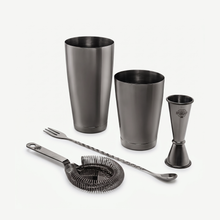
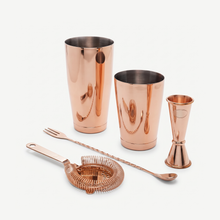
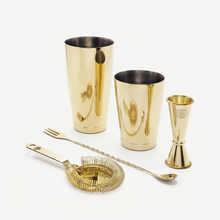
For a lambic, besides the glass, all you really need is a bottle opener. If you want to make faro, measure out the rock candy syrup with a jigger and stir it in with a bar spoon. These are the bar tools we use ourselves; you can find everything in our bar tools & cocktail sets.


Glass set (our pick 01) + 2 bar tools together € 48,85.
Which spirit goes with this?
Lambic takes center stage; these are the bottles you can serve alongside it. With a dry, sour beer, genever from the same corner of Europe is the most natural choice. Familiar bottles include Bokma and Vieux. Each drinks page tells you the alcohol percentage, what it tastes like, which cocktails it works in, and which glass you need.


Variations & twists
Lambic is rarely the end of the story. Blend young and old lambic and let the mixture ferment again in the bottle, and you get gueuze, with carbonation that lambic itself lacks. Leave lambic on sour cherries for months and it becomes kriek; with raspberries, it's called framboise. Add beet sugar and you have faro, the sweet version that used to be the inexpensive everyday option. Want to read more? See all drinks and brands.
Serving tip
Don't serve it ice-cold: between eight and twelve degrees, the woody and sour notes come through; below that, little remains of them. Take the bottle out of the fridge half an hour before serving. Aged cheese or sourdough bread go well with it because they can stand up to the acidity.
Good to know
What exactly does spontaneous fermentation mean?
The brewer doesn't add yeast. The boiled wort is moved while still warm to a coolship, a wide, shallow vessel under the roof, where it cools uncovered overnight. During those hours, wild yeasts and lactic acid bacteria from the outside air enter the beer and start fermentation. That's why the region around the brewery is part of the recipe.
Why does a lambic brewer use old hops?
Because the brewer doesn't use hops for bitterness. Hops that have been stored for a few years lose their aroma and most of their bitterness, but retain their preservative qualities. That's exactly what you want in a beer that spends years in a barrel and whose flavor should be defined by the sourness.
Why doesn't it have a foam head?
Because lambic from the cask contains virtually no carbonation. Fermentation began years ago, and the beer hasn't then refermented in the bottle, as gueuze does. So you're left with a flat beer, at most with a thin rim of foam that quickly dissipates.
Where does lambic come from?
From the Pajottenland and the Zenne Valley, the area southwest of Brussels. Spontaneously fermented beer is also made outside this region, but the name lambic belongs to this part of Belgium.
How much alcohol does lambic contain?
Usually somewhere between five and six percent. It varies by cask and year, because with spontaneous fermentation, not everything is fixed as it is with regular brewer's yeast.
Frequently asked questions
What glass do you use for lambic?
In the region itself, a simple tumbler: a straight-sided glass without a stem, about thirty centiliters. That exact style isn't in our range, but a straight-sided beer tumbler or beer glass of the same size comes close. Since there's no head, you don't need to leave room for foam.
What's the difference between lambic and gueuze?
Lambic is the base beer: spontaneously fermented, aged for years in oak casks, and almost without carbonation. Gueuze is a blend of young and old lambic that referments in the bottle and becomes carbonated. So lambic is the starting point, and gueuze is the finished product.
How cold should you serve lambic?
Between eight and twelve degrees. Colder than that masks the woody and sour notes, leaving you with mostly sourness; warmer than twelve degrees and it quickly becomes cloying.
How much alcohol does lambic contain?
Usually between five and six percent, depending on the cask and the year. Lambic isn't a light beer, even though it goes down dry.
Everything for your bar,
to one address
Hospitality-grade glasses, delivered in sets. Order today, delivered quickly.
Shop glasses →