The black tea recipe
for your table
Bring the water to a boil, then let it stand for half a minute to bring it to around 95 degrees. Meanwhile, rinse the mug with a splash of that water to warm it before adding the tea.
Put two grams of loose tea in the mug or add the tea bag. Two grams is about one level teaspoon for fine leaves and a heaped teaspoon for coarse leaves such as Darjeeling.
Pour the water over the tea and let it steep for three to five minutes. Three minutes makes a light cup, while five minutes makes a strong one. Keep an eye on the time, because after five minutes the tannins are released and the tea becomes astringent and leaves your mouth feeling dry.
Remove the tea bag or strain out the leaves, otherwise it will keep steeping. If you want to add milk, pour it in last and give it one stir; the milk immediately softens the tannins’ sharp edge. Add sugar or honey last.
What did you think of this recipe?
One click on a star is all it takes. If you’d like to add a comment, we’ll review it before it appears here.
Save this recipe
Send the black tea recipe to your own email so you have it handy when you make it. You'll also receive a €5 discount code on purchases of €50 or more, for the glasses to go with it.
The story
All true tea comes from the same plant, Camellia sinensis. What sets the varieties apart is what happens to the leaves after picking. For black tea, the leaves are crushed and then fully oxidized: they turn from green to copper-brown, and the flavor becomes full-bodied and malty. The Chinese call this same tea red tea, after the color of the brew; we call it black, after the color of the dry leaves. Black tea keeps well and stands up to a long journey, which is why this particular variety traveled around the world for centuries.
The right glass
Black tea needs boiling-hot water, so the glass must be able to withstand it. A glass of around thirty centiliters with a handle is the practical choice: room for a generous cup, while your fingers stay away from the heat. Clear glass lets you see how dark your tea gets, which is handy if you want to judge by color whether it has steeped long enough. If you want to brew a whole pot instead of a single cup, take a look at the teapots.

Pasabahce Basic Some Like It Hot Tea Glass 34 cl (6 pieces)

Bormioli Rocco Icon Mug Tea Glass 32 cl (6 pieces)
Both sets together € 47,90.
The right tools
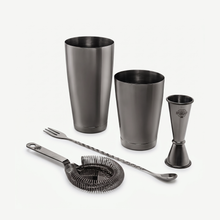
For black tea, besides a glass, use a fine strainer to keep loose leaves out of the cup and a long bar spoon to stir in the milk and honey. These are the bar tools we use ourselves; find everything in our bar tools & cocktail sets.


Glass set (our pick 01) + 2 bar tools together € 49,85.
Which splash belongs in black tea?
Black tea is robust enough for a splash, especially with honey. In the glass, whisky works best, with Jameson and bourbon being the most popular bottles. Each spirits page tells you the alcohol percentage, what it tastes like, which cocktails it goes with, and which glass you need.


Variations & twists
Earl Grey is black tea with bergamot and needs the same steeping time. English breakfast is a blend of robust teas made specifically to be served with milk. Add cardamom, ginger, and cinnamon for chai latte, or let a strong cup cool and pour it over ice for iced tea. A splash of whiskey with honey and lemon turns it into a Hot Toddy. Looking for more inspiration? Browse over 100 cocktail recipes.
Serving tip
Serve the milk separately at the table instead of stirring it in, so everyone can decide how much to add. Remove the tea bag or infuser before serving, otherwise the tea will steep for too long within a few minutes. A small plate under the glass catches the wet tea bag.
Good to know
Why black tea is black
After picking, the leaves are bruised, bringing their juices into contact with the air. The leaves then oxidize fully, changing from green to copper-brown and then almost black. Green tea doesn't undergo this step; instead, the leaves are briefly heated to stop them from changing color. So it's the same leaf, treated differently.
What tannins do to your cup
Tannins are the astringent compounds in tea leaves. They give black tea its body and dry mouthfeel, but they don't all come out at once. In the first few minutes, mostly the flavor compounds dissolve, followed by the tannins. After five minutes, that balance shifts in the wrong direction and the cup becomes bitter and astringent.
Milk softens the tea
The proteins in milk bind to the tannins in tea. As a result, fewer of them reach your tongue, making the cup feel rounder and less dry. That is exactly why robust blends like English breakfast are traditionally drunk with milk, while a delicate Darjeeling usually isn't.
The best-known varieties at a glance
Assam comes from northeastern India and is malty and robust, the classic milk tea. Ceylon comes from Sri Lanka and is fresher and more citrusy. Darjeeling grows high in the Himalayas and is light and floral, more like a white wine among black teas. Keemun comes from China and is smooth and slightly smoky. Earl Grey is not a place of origin but a flavored tea: black tea with bergamot orange oil.
How much caffeine does it contain
A 20-centiliter cup of black tea contains roughly 40 to 70 milligrams of caffeine, depending on the type, the amount of leaves, and the steeping time. That's roughly half the amount in a cup of drip coffee. Steeping it longer extracts more.
Frequently asked questions
How hot should the water be for black tea?
About 95 degrees, just off the boil. Bring the water to a boil and let it sit for half a minute before pouring. Black tea handles the heat well; water at that temperature would make green tea bitter.
How long should black tea steep?
Three to five minutes. Three minutes makes a light cup, five a strong one. If you leave it longer, tannins are released and the tea becomes astringent and dry in your mouth. So remove the bag or infuser as soon as the time is up.
What is the difference between black and green tea?
The leaves come from the same shrub; the difference lies in how they are processed. Black tea is fully oxidized, making it dark, full-bodied, and malty, and is brewed with 95-degree water for three to five minutes. Green tea is not oxidized, stays light and grassy, and needs water at 70 to 80 degrees for one to three minutes.
Why do people put milk in black tea?
The proteins in milk bind the tannins in the tea, making the cup taste smoother and rounder and eliminating the dry feeling in your mouth. This works best with robust blends such as Assam and English breakfast. Most people leave out the milk with a light Darjeeling or Earl Grey.
Also delicious
Everything for your bar,
to one address
Hospitality-grade glasses, sold in sets. Order today, delivered quickly.
Shop the glasses →