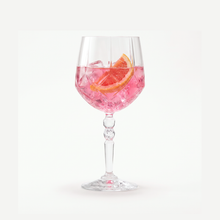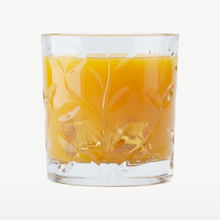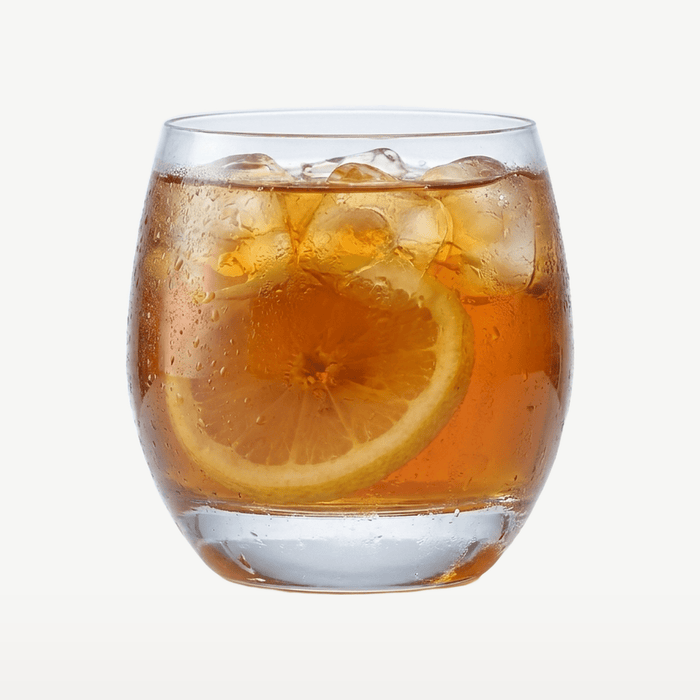
Royal Leerdam Amira Amuse Glass 15 Cl - 6 Pieces
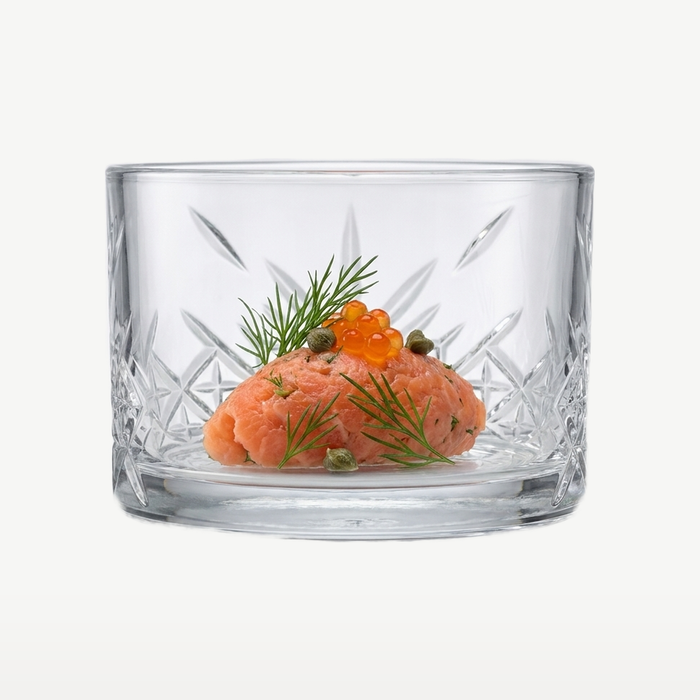
Pasabahce Timeless Amuse Glass 23,6 Cl - 4 Pieces
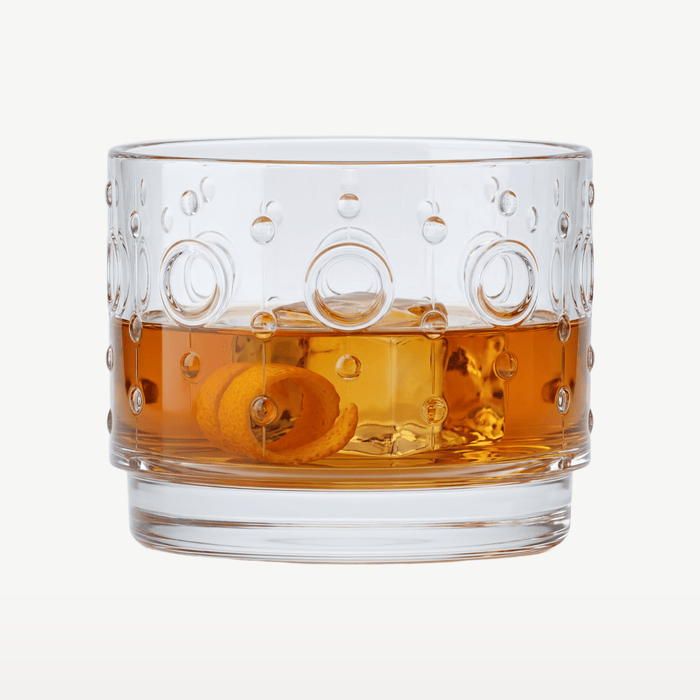
RCR Circus Low Tumbler 17 Cl - 6 Pieces
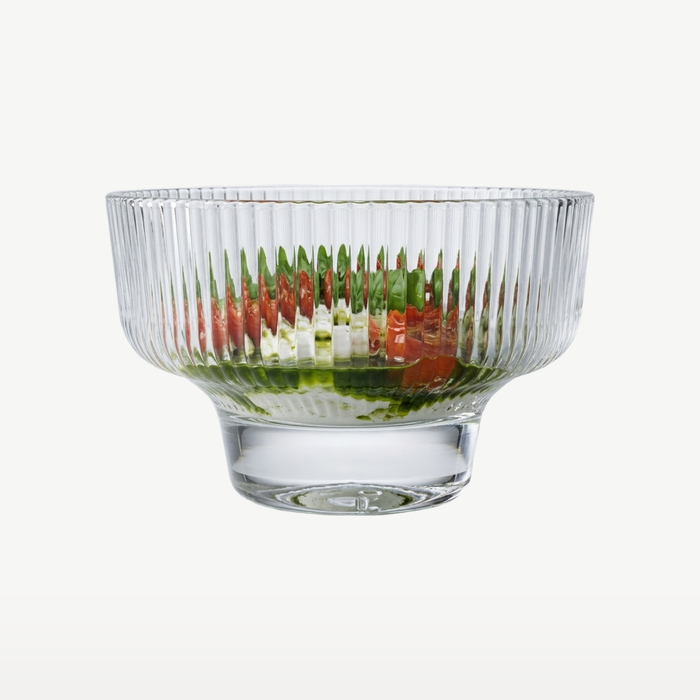
La Rochere Alice Coupelle 18 Cl - 6 Pieces

The amuse glass recipe
for your table
Cut the fish into half-centimeter cubes and mix them with the lime juice and a pinch of salt. Put the bowl in the fridge for 15 minutes: the acid makes the outside of the cubes opaque and firm while the center stays soft.
Mash the avocado with a fork until smooth, mixing in salt and a few drops of lime juice. Keep it on the firm side, because a runny cream will blend with the layer above in the glass, and then you won't see two distinct layers.
Spoon the avocado into the bottom of the glass and smooth it flat against the sides with the back of a teaspoon. A straight dividing line is the whole point of a layered amuse glass; a slanted layer is immediately noticeable from the side.
Let the fish drain briefly and spoon it on top, with the red onion and coriander sprinkled over it. Keep the glasses chilled until serving and finish them at the last moment; otherwise, moisture from the fish will seep into the bottom layer.
What did you think of this recipe?
One click on a star is enough. If you want to add anything, we'll review it before it appears here.
Save this recipe
Email this recipe for the amuse glass to yourself so you have it handy when you make it. You'll also receive a €5 discount code on orders of €50 or more, for the glasses to go with it.
The story
The full name for amuse is amuse-bouche, French for something that occupies the mouth. In a restaurant kitchen, it's the course you didn't order and don't pay for: it arrives just as you sit down and tells you in one bite what kind of cuisine you're about to experience. It works exactly the same way at home, and precisely because it's small, you can put something in it that you'd never make as a full serving. A spoonful of something expensive, a flavor that would become tiresome after three bites, a combination that only works in miniature. That's the whole charm of it.
The right glass
For a layered amuse-bouche, the glass is not packaging but part of the dish: what you see from the side is half the effect. The square bowl below holds ten centiliters and has straight, flat sides, so the dividing line between two layers stays straight; according to the description, there is room for a layered little appetizer in 10 cl. Beside it is Pasabahce's Elysia amuse glass: a more spacious 23.5 cl bowl with cut-glass relief and a sturdy base. Serve a more generous amuse-bouche in it, and after the main course, it works just as well for dessert. Find more small glassware for bites in the amuse glasses collection.

La Rochère Kube Amuse Bowl 10 cl (6 pieces)

Pasabahce Elysia Amuse Glass 23.5 cl (4 pieces)
Both sets together € 40,90.
The right tools
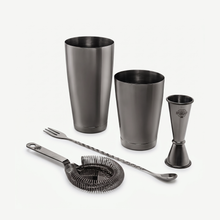
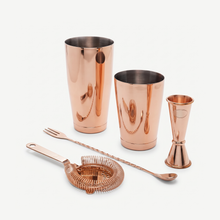
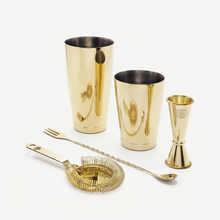
To serve an amuse-bouche in a small glass, use a bar spoon with a long handle alongside the glass, so you can create the layers all the way to the bottom without smearing the sides, and a fine strainer to make soup perfectly smooth. These are the bar tools we use ourselves; find them all in our bar tools & cocktail sets.


Glass set (our choice 01) + 2 bar tools together € 48,85.
What should you serve with it?
With an amuse-bouche, pour something light and dry, as it comes before the wine served with the starter and shouldn't overpower it. A crisp white wine goes well with fish and vegetables, crémant or champagne work with anything salty or creamy, and a glass of moscato is a good match for a sweet amuse-bouche. Each drinks page tells you the alcohol percentage, what it tastes like, which cocktails it pairs well with, and which glass to use.


Variations & twists
Two layers are a good start, but an amuse-bouche can also consist of just one thing. A spoonful of cold pea soup with mint, a small glass of gazpacho, roasted pepper cream with a drop of olive oil, or a mini shrimp cocktail. For a vegetarian option, try roasted beetroot with goat cheese and walnut, or a layer of lentils topped with yogurt. A sweet amuse-bouche after the main course works just as well, such as a spoonful of panna cotta or tiramisu in the same small glass. Looking for more inspiration? Browse over 100 cocktail recipes.
Serving tip
Set the glasses on a flat plate or board so they can be brought to the table all at once and no one has to wait. Place a small spoon or cocktail pick beside each glass, because an amuse served in a glass is awkward to eat without a utensil. Serve them all at once, and only once everyone is seated.
Good to know
What exactly is an amuse?
An amuse is the course served before the starter, and it’s not something you ordered. It’s small, meant to be eaten in one or two bites, and gives you a quick sense of the cuisine to come. Having to eat it in two bites isn’t a rule of style, but a practical guideline: an amuse that requires a knife and fork has become a starter.
How big is an amuse?
Five to ten centiliters is more than enough, and you don’t fill the glass to the brim. If you go bigger, someone will fill up on it, and the starter will arrive too late. A 10-centiliter glass filled two-thirds of the way is a good size for about three spoonfuls.
Why use a clear glass for layers?
Because half the effect is visible from the side. A clean, straight line between two colors does the trick, while a colored or heavily textured glass distorts it. Use the back of a small spoon to smooth the bottom layer flat against the side of the glass, then fill the rest.
Chilled glass or room temperature?
That depends on what’s in it. Serve a cold amuse with fish, avocado or gazpacho in a chilled glass, so it stays cold even after ten minutes on the table. An amuse with a warm element, on the other hand, should go in a room-temperature glass, because a cold glass draws the heat out within a minute.
A spoon or a cocktail pick?
Use a small spoon for anything runny, creamy or layered, and a cocktail pick for anything you can pick up in one go. Without a utensil, someone will end up putting a finger in the glass or waiting for someone else to start. Place the spoon beside the glass, not in it, so the glass stays upright.
How much can you prepare in advance?
Almost all the components can be prepared a day ahead: creams, soups, marinated vegetables and chopped herbs can be covered and refrigerated. Assemble everything on the day, then finish just before serving, because moisture from a top layer seeps into the bottom layer within an hour. If it contains raw fish, buy and prepare it the same day and keep it refrigerated until the last moment.
Frequently asked questions
What is an amuse?
An amuse is a small dish served before the starter, meant to be eaten in one or two bites. It stands apart from the rest of the menu and is usually a spoonful of something you wouldn’t make as a full serving.
How big should an amuse-bouche be?
Five to ten centiliters, and don't fill the glass to the rim. Two or three spoonfuls are enough. Any bigger, and it becomes a starter, leaving someone half full before the menu has even properly begun.
What glass do you use for an amuse-bouche?
A small, clear glass of five to ten centiliters that easily fits a small spoon. For a layered amuse-bouche, choose straight, colorless sides so the line between the layers remains visible from the side. Texture and color disrupt that view.
Can you make an amuse-bouche ahead of time?
The components, though: creams, soups, and marinated vegetables can be covered and kept in the fridge a day ahead. Assemble them on the day and finish just before serving; otherwise, moisture from the top layer seeps into the one below.
Also delicious
Everything for your bar,
to one address
Catering-quality glasses, sold in sets. Order today, delivered quickly.
Shop glasses →