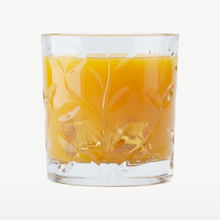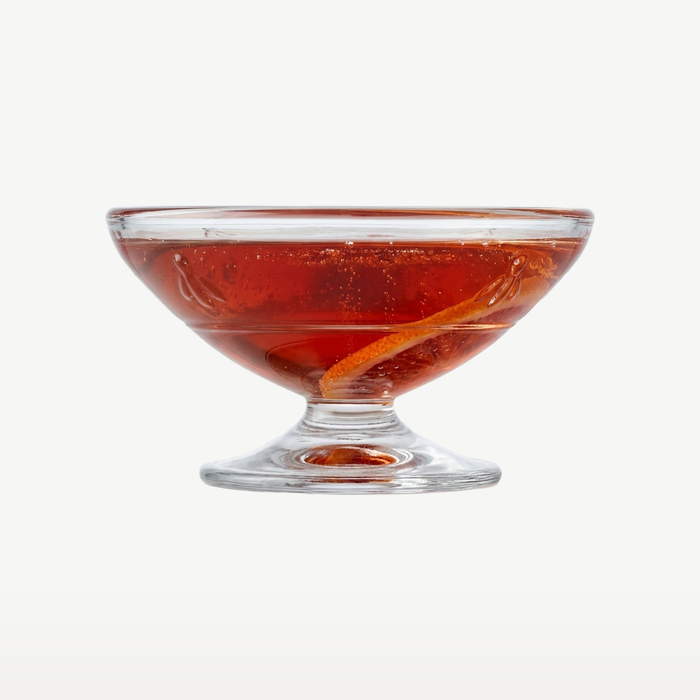
La Rochère Abeille Coupe 20 cl - 6 Pieces
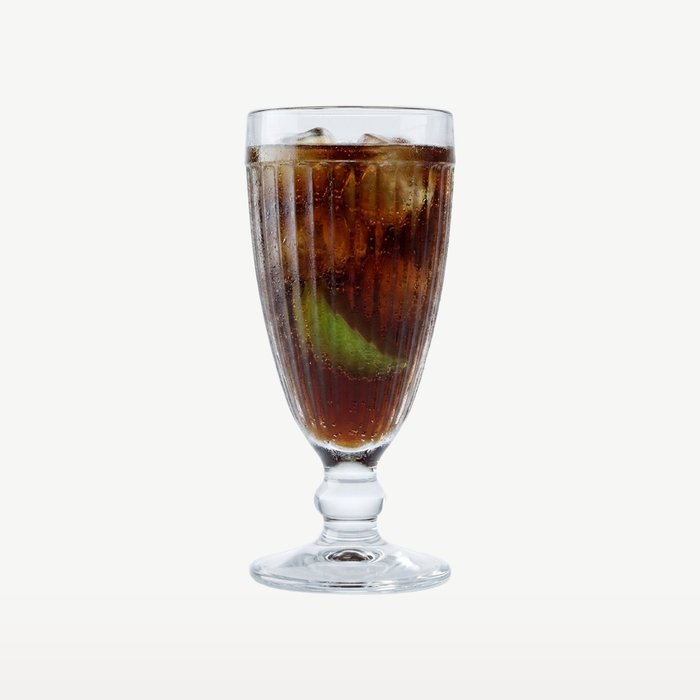
La Rochère Antillaise Iced Tea Glass 29 cl - 6 Pieces
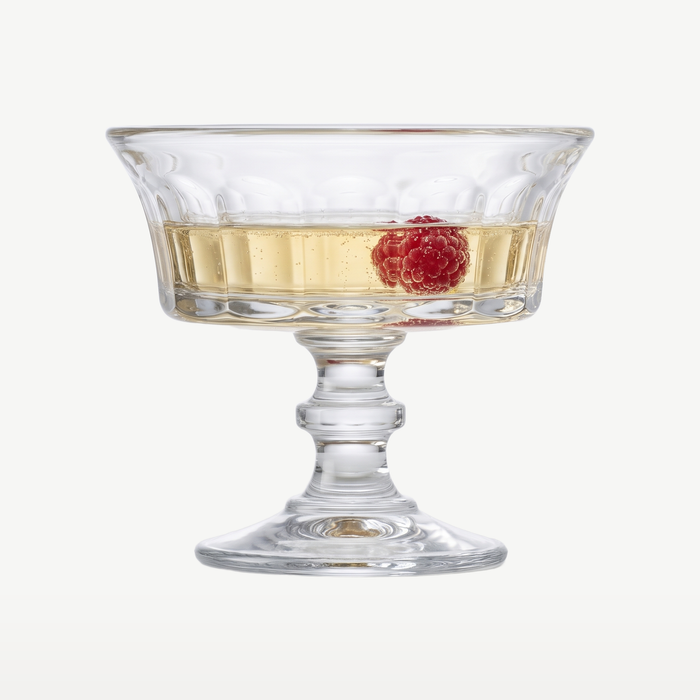
La Rochère Perigord Coupe 22 Cl - 6 Pieces
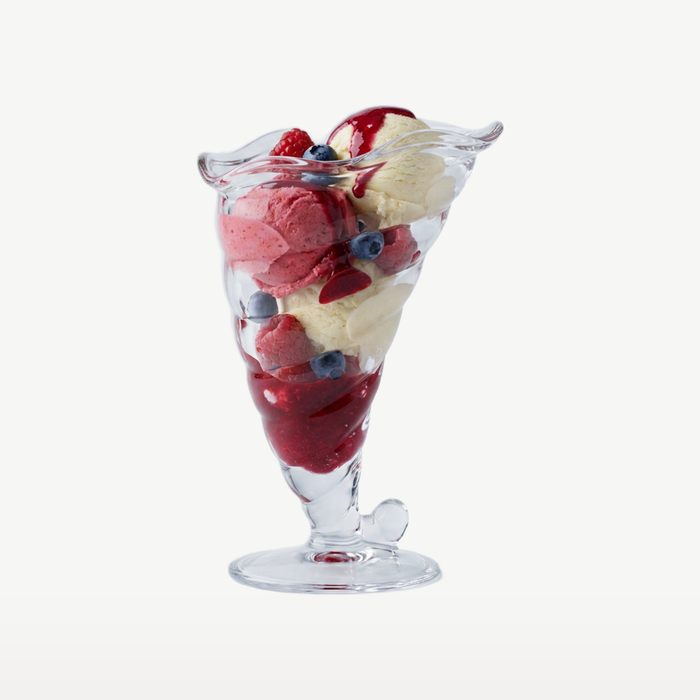
Bormioli Rocco Fortuna Iced Tea Glass 32 Cl - 6 Pieces

The custard recipe
for your table
Split the half vanilla pod, scrape out the seeds, and put the seeds, pod, milk, and salt together in a pan. Bring the milk almost to a boil and remove it from the heat as soon as steam rises.
Whisk the egg yolks with the sugar and stir in the diluted cornstarch. While whisking, pour in a splash of the hot milk so the egg gets used to the heat, then stir the mixture back into the pan.
Place the pan over low heat and stir along the bottom with a wooden spoon. The custard thickens between 80 and 85 degrees; above 85 the egg curdles, and below 75 it stays thin. With cornstarch added, the mixture can boil briefly, which is exactly why almost every home recipe uses cornstarch.
Pour the custard through a fine sieve into a bowl or straight into the glasses, and press plastic wrap tightly onto the surface so a skin doesn't form. Let it cool, and only assemble it once it's cold, with a layer of yogurt on top.
What did you think of this recipe?
One click on a star is all it takes. If you'd like to add a comment, we'll review it before it appears here.
Save this recipe
Send this custard recipe to your own email so you have it handy when you're ready to make it. You'll also get a € 5 discount code on purchases of € 50 or more, for the glasses to go with it.
The story
Carton custard belongs in the Dutch fridge just like milk and cheese, which makes homemade custard confusing at first: it's thinner. Carton custard contains thickening agents that keep it thick right up to the last day of its shelf life, and you can't achieve that at home with egg yolks and a spoonful of cornstarch. What you get in return is flavor, because real vanilla in milk does something different from flavoring. The double layer of custard with yogurt on top is a Dutch invention that is rarely understood abroad, and you build it up in a glass.
The right glass
The well-known double layer of custard and yogurt depends on a straight-sided glass, because that keeps the dividing line between yellow and white level; in a footed goblet, the line follows the curve and is barely visible. The tumbler below holds twenty-five centiliters, exactly one serving, and according to the description, the faceted surface of this glass makes the layers especially visible. It is also tempered glass that, according to the description, can go from the freezer to a hot wash, so pre-chilling is no problem. There is also a roomy ice cream dish holding twenty-eight centiliters, intended for custard with fruit or crumble on top. There is no such thing as a proper custard glass; in the Netherlands, the regular tumbler has become one in practice. More glassware for dessert is available at the dessert glasses.

Duralex Picardie tumbler 25 cl (6 pieces)

Onis Primavera ice cream coupe 28 cl (6 pieces)
Both sets together € 40,90.
The right tools
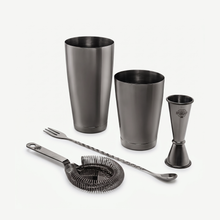
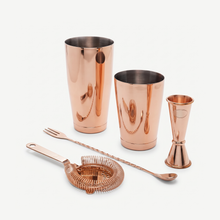
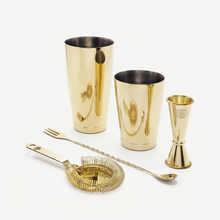
For custard, in addition to a glass, you'll need a pan, a wooden spoon and two things that make all the difference: a fine strainer to pour the thickened custard through, leaving any egg lumps behind, and a bar spoon with a long handle to build the layered pour in the glass without smearing the sides. These are the bar tools we use ourselves; find them all in our bar tools & cocktail sets.

Catches egg lumps so the custard pours smoothly into the glass

Long stem for the layered pour, reaching to the bottom of the glass
Glass set (our pick 01) + 2 bar tools together € 39,85.
What to serve with it?
Custard is served in most homes with children around, and then nothing goes with it: a glass of milk or water is enough, and that's no shortcoming. If you have it for dessert after dinner, a small glass of liqueur goes well, for example Baileys with the vanilla version or Kahlúa with the coffee and chocolate version. On each drinks page, you'll find the alcohol percentage, what it tastes like, which cocktails go with it, and what glass you need.


Variations & twists
The three flavors everyone knows are vanilla, chocolate, and hopjes. For chocolate custard, melt fifteen grams of dark chocolate per serving into the warm milk and leave out the vanilla; for hopjes custard, dissolve a few hopjes in the milk instead, or add strong coffee with caramel. Make the two-layer version by pouring the chilled custard into a glass and spooning a layer of full-fat yogurt along the side. Looking for more inspiration? Browse over 100 cocktail recipes.
Serving tip
Pour the custard into glasses while it’s still warm and immediately cover the surface with plastic wrap, so it cools without forming a skin and you won’t have to transfer it later. Chill for at least three hours, because warm custard is always thinner than it will be once it’s fully set. Finish the glasses at the table with a layer of fruit or crumbled speculoos biscuits, so they stay crunchy on top instead of sinking in.
Good to know
Why does custard thicken between 80 and 85 degrees?
Because the protein in the yolk coagulates at that temperature, thickening the milk. Stay below it, around 75 degrees, and not enough happens, so the custard remains thin. Go above it, and the egg sets too quickly, leaving you with strands and lumps instead of a smooth mixture.
Why is cornstarch in almost every homemade recipe?
Because cornstarch widens the temperature window. The starch coats the proteins, so the egg is less likely to curdle, which means custard made with cornstarch can boil briefly. This makes the recipe much more forgiving at home than a custard made with egg yolks alone, where you really have to watch the temperature.
How do you prevent a skin forming on custard?
Press plastic wrap tightly onto the surface itself, not over the rim of the bowl. A skin forms when moisture evaporates and the proteins on top dry out; if the wrap touches the custard, that can’t happen. This only works if you do it right away, while the custard is still warm.
Why is homemade custard thinner than packaged custard?
Packaged custard contains additives that keep it thick, from starch to carrageenan. At home, you only have egg yolks and cornstarch. You can get closer by adding an extra half spoonful of cornstarch, but the real difference is the flavor: homemade custard has vanilla, not flavoring.
The custard has curdled. Is there anything I can do?
Immediately remove the pan from the heat and pour the custard through a fine sieve to catch most of the egg lumps. Then briefly whisk it or blend it with a hand blender. It won’t be quite as it should be, but almost no one will notice in a glass topped with a layer of fruit.
How many egg yolks go in a liter?
The classic home recipe uses four egg yolks per liter of milk, with 80 grams of sugar, a vanilla pod and two tablespoons of cornstarch. The recipe above uses two yolks per 250 milliliters, so that custard turns out a little richer. For the classic ratio, halve the number of yolks.
Frequently asked questions
What exactly is custard?
Custard is a thickened dairy dessert made with milk, egg yolk and sugar, essentially the same as a custard. At home, cornstarch is almost always added, so the mixture can come to a boil without the egg curdling. It is eaten cold, from a glass or a bowl.
At what temperature does custard thicken?
Between 80 and 85 degrees. Below 75 degrees, it stays thin, and above 85 degrees, the egg curdles. Adding cornstarch gives you a much wider window, because the custard can briefly come to a boil without going wrong.
What glass should you use for custard?
A clear glass with straight sides that lets a spoon reach the bottom; 250 milliliters is a good size for one serving. If you're making the double layer with yogurt, those straight sides are the whole point: they keep the dividing line between the two layers level.
How do you make layered custard with yogurt?
Let the custard cool completely first, because warm custard will mix with anything you put on top. Pour it into the glass, let it stand for half an hour, then carefully spoon a layer of full-fat yogurt on top using the back of a spoon, working inward along the side.
Also delicious
Everything for your bar,
to one address
Horeca-quality glasses, sold in sets. Order today, delivered quickly.
Shop the glasses →