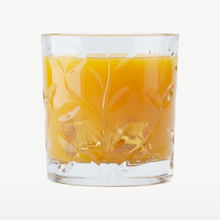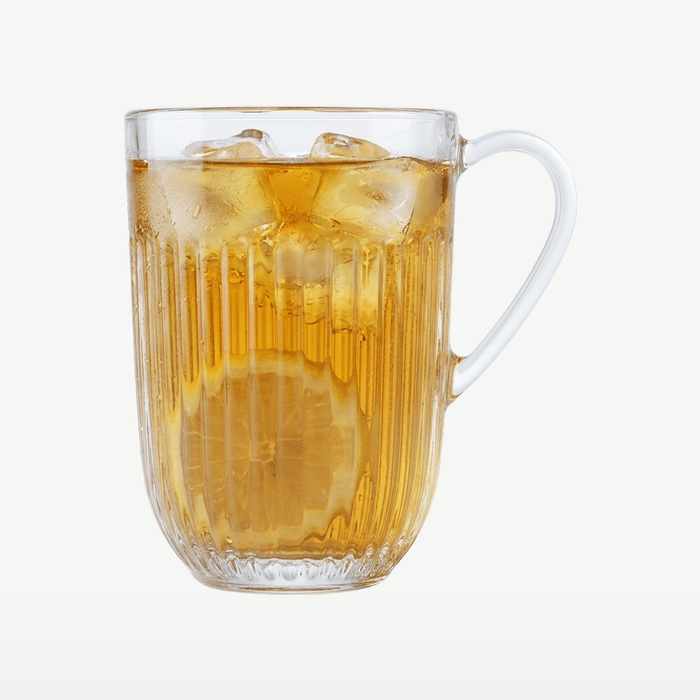
La Rochère Ouessant Tea Glass 36 Cl - 6 Pieces
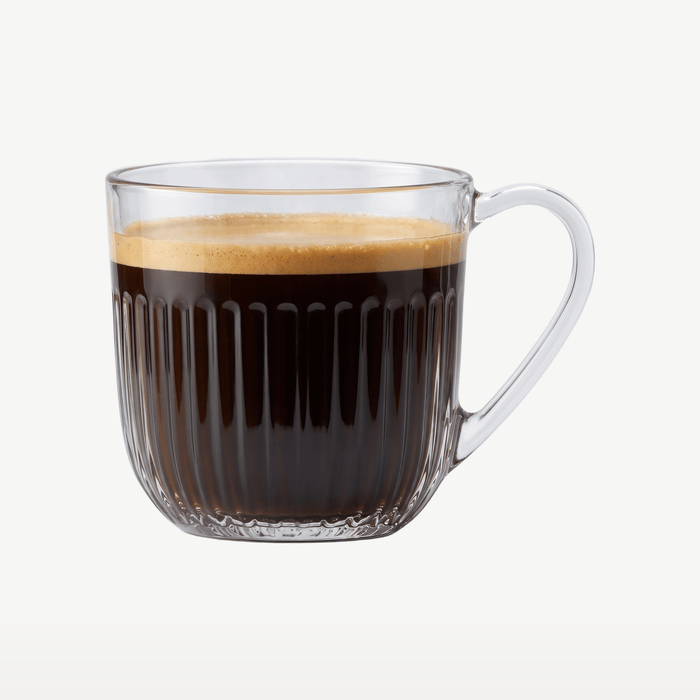
La Rochère Ouessant Coffee Glass 25 Cl - 6 Pieces

Pasabahce Elysia Tea Glass 25 Cl - 2 Pieces

Pasabahce Elysia Tea Glass 31 Cl - 2 Pieces

Latte macchiato recipe
for your table
Heat the whole milk to about 60 degrees and froth it until there are two to three centimeters of fine foam on top. Don’t let the milk boil. Above seventy degrees, the foam collapses and the milk tastes cooked.
Rinse the tall glass with hot water. Pour in the milk and foam until the glass is about two-thirds full, then wait half a minute. The foam will settle on top.
Brew the espresso and pour it straight in, slowly and in a thin stream along the side of the glass or over the rounded side of a spoon. Pouring the milk onto the espresso doesn’t work. Everything blends together, leaving you with a café au lait without any layers.
Sprinkle some cocoa or cinnamon over the foam and serve with a long spoon. If you're making the version with alcohol, add the amaretto or Baileys to the milk in step two, not afterward.
What did you think of this recipe?
One click on a star is all it takes. If you'd like to add a comment, we'll review it before it appears here.
Save this recipe
Send the latte macchiato recipe to your own email so you have it handy when you're ready to make it. You'll also get a €5 discount code for purchases of €50 or more, for the matching glasses.
The story
Latte macchiato literally means spotted milk. That's how you make it, too: milk with a spot of coffee in it. A cappuccino is made the other way around. First, the espresso goes into the cup, then you pour in the milk, in roughly equal parts coffee, milk, and foam. Caffè latte falls somewhere in between. Half coffee, half warm milk, in a cup, with no one paying attention to the layers. Of the three, a latte macchiato has the most milk and the least coffee. So it's also the mildest.
The right glass
With a latte macchiato, you want to see the layers, and that only works in a tall, narrow glass. In a wide cup, the milk and coffee sit next to each other instead of on top of each other, and the effect is lost. We use a glass that holds thirty-five to forty-five centiliters. The milk sits high enough in it for the espresso to slowly flow through, with room left above for the foam. Thick pressed glass keeps the milk warm longer. A double-walled glass with a handle lets you hold it without burning your fingers. For espresso or cappuccino, see the cappuccino glasses.

La Rochère Ouessant Latte Macchiato Glass 43 cl (6 pieces)

Luigi Bormioli Thermic Glass Coffee Glass 29.5 cl With Handle (2 pieces)
Both sets together € 60,90.
The right tools
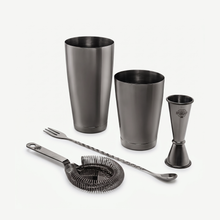
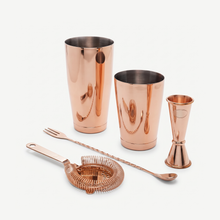
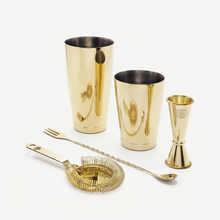
For a latte macchiato, alongside the glass, use a bar spoon that reaches the bottom of the tall glass, a nutmeg grater to grate chocolate or cinnamon over the foam, and a jigger to measure the espresso and any extra splash precisely. These are the bar tools we use ourselves; find them all in our bar tools & cocktail sets.


Glass set (our choice 01) + 3 bar tools together € 72,80.
What can you add to a latte macchiato?
Without alcohol, a latte macchiato is simply milk, espresso, and foam. If you want to add a splash, liqueur works best. Popular bottles include amaretto and Baileys. On each drink page, you can find the alcohol percentage, flavor profile, cocktails it works well in, and the glass you need.


Variations & twists
Oat milk with barista on the carton still makes firm foam. With almond milk, the foam is thinner and settles sooner. Stir half a teaspoon of vanilla syrup or caramel syrup into the milk to sweeten the bottom layer while keeping the layers in place. For adults, stir 2 cl of amaretto or Baileys into the milk before adding the espresso. Want it stronger? Use a double espresso of 6 cl and keep the milk at twenty centiliters to maintain the right ratio. Find more ideas in more than 100 cocktail recipes.
Serving tip
Rinse the glass with hot water first. That way, the milk cools down more slowly and the foam lasts longer. Serve it with a long spoon, because you eat the foam and drink the coffee. Bring it straight to the table. After a few minutes, the layers blend together and you’re left with plain coffee and milk.
Good to know
Why does the milk go into the glass first?
Otherwise, you won’t get layers. With the milk and foam already in the glass, the espresso slowly filters through and remains visible as a dark band. Pour it the other way around, and the milk splashes into the coffee and everything mixes at once. You’ll end up with uniformly brown coffee. Tasty, sure, but that’s koffie verkeerd, not a latte macchiato.
What temperature should the milk be?
Around sixty degrees. Warm enough to drink right away, the milk sugars taste slightly sweet, and the proteins still hold the foam together firmly. Above seventy degrees, the foam collapses and the milk tastes boiled. There’s no fixing that. No thermometer? Stop when you can’t hold the pitcher for more than a few seconds.
Difference between cappuccino, koffie verkeerd, and café macchiato
For a cappuccino, the espresso goes into the cup first, followed by the milk, with roughly equal parts coffee, milk, and foam. Koffie verkeerd is coffee with hot milk, half and half, served in a cup without layers. A café macchiato is the opposite of a latte macchiato. It’s an espresso topped with just a little milk foam. A latte macchiato has the most milk per espresso, and it’s the only one where the pouring order really matters.
How much milk for how much coffee?
For a 3 cl espresso, use about 250 milliliters of milk, with two to three centimeters of foam. That fits perfectly in a 350-to-450-milliliter glass, with room to spare at the top. For a double espresso, use 200 to 300 milliliters of milk. Any more and the coffee disappears into the milk.
With or without alcohol
Without a shot of alcohol, it’s simply coffee with milk that anyone can drink. Add 2 cl of amaretto or Baileys, and it becomes a drink for adults. Stir the liqueur into the milk before adding the espresso to keep the layers nice and distinct. Alcohol is not for anyone under eighteen. NIX18.
Frequently asked questions
Why are my layers mixing together?
Often, the espresso goes in too quickly, or the foam is too thin. Pour the coffee in a thin stream along the side of the glass or over the rounded side of a spoon. Make sure you have two to three centimeters of firm foam. A cold glass also works against you, so rinse it with hot water first.
Which glass do you use for a latte macchiato?
A tall, narrow glass of about thirty-five to forty-five centiliters. Tall and narrow, so the layers sit on top of each other rather than side by side. And glass, because you can't see anything in a ceramic mug. Thick pressed glass keeps the milk warm longer. You can hold a double-walled glass with a handle without burning your fingers.
Can I make a latte macchiato without a milk frother?
Of course. Heat the milk in a saucepan to about sixty degrees and whisk vigorously for half a minute. Or shake it cold in a jar with a lid, then heat it briefly. The foam will be coarser than with a steam wand, but firm enough for the espresso to settle through it.
Which milk makes the best foam?
Whole cow's milk. The protein keeps the foam firm, and the fat makes it creamy. For plant-based milk, barista oat milk foams best. Almond milk stays thinner and settles faster. You can also use semi-skimmed milk, but its foam doesn't last as long.
Also delicious
Everything for your bar,
to one address
Foodservice-quality glasses, delivered in sets. Order today, delivered quickly.
Shop glasses →