

Veuve Clicquot
The house behind the yellow label from Reims, which grew under a widow who took the reins at twenty-seven. What's in Yellow Label, how the other bottles differ, and which glass to use.


The widow's house and the yellow label
Philippe Clicquot came from a family of bankers and textile merchants, but founded a champagne house in Reims in 1772. His son François died in 1805, and his wife, the then twenty-seven-year-old Barbe Clicquot Ponsardin, took over the business. She is regarded as one of the first businesswomen of the modern era, with a series of firsts to her name: the first known vintage champagne, the invention of the riddling table and the first known blended rosé. Her motto was short: only one quality, the finest.
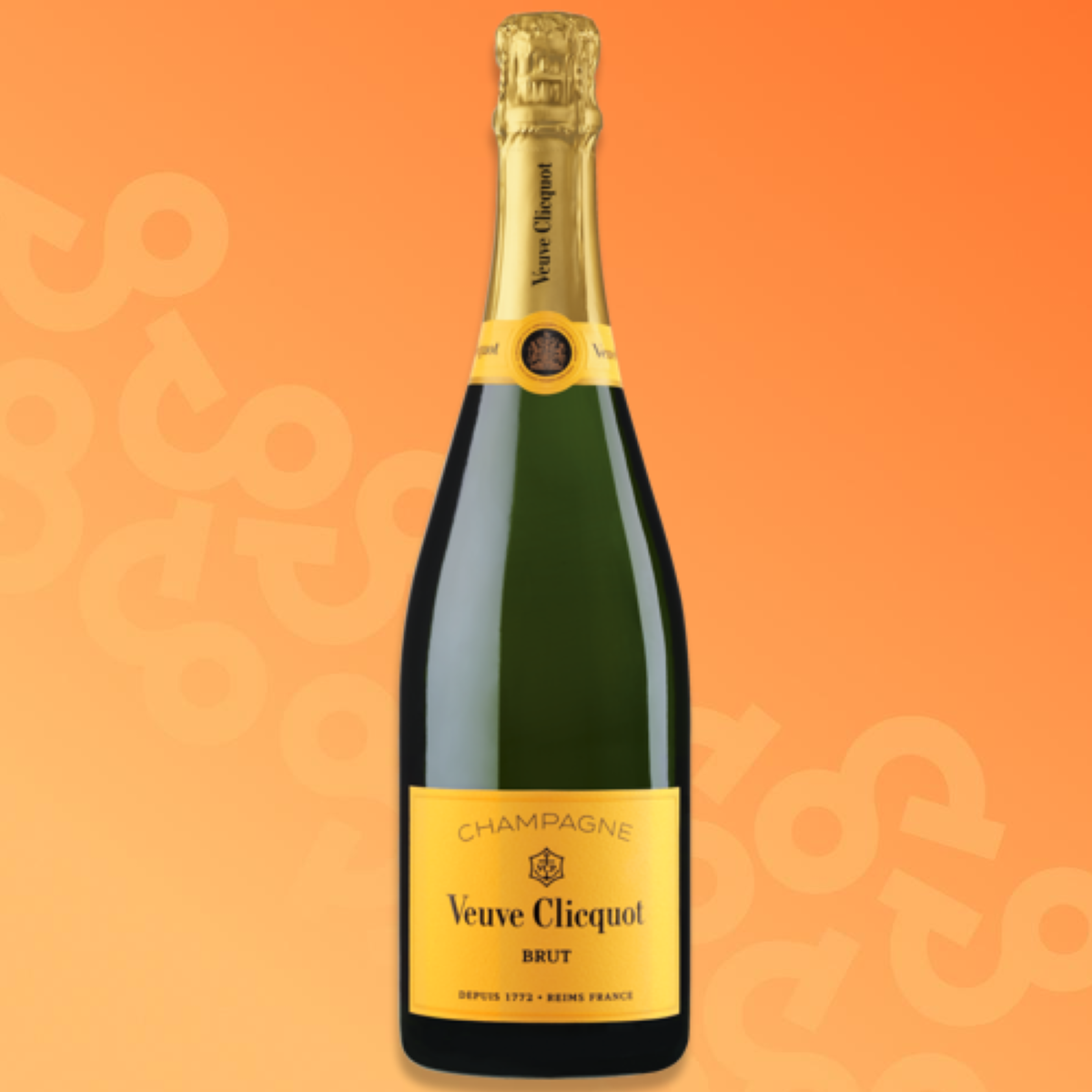
The yellow label the house is known for was registered in 1877 by Edouard under the name V. Clicquot P. Werlé, for a champagne that was slightly drier and became a great success in England. The Yellow Label tastes the same year after year thanks to the 30 to 45 percent reserve wine from previous harvests used in the blend. The wine itself is 12% alcohol, with 50 to 55 percent Pinot Noir, 28 to 33 percent Chardonnay and 15 to 20 percent Meunier.
In brief
From bone-dry to dessert-sweet
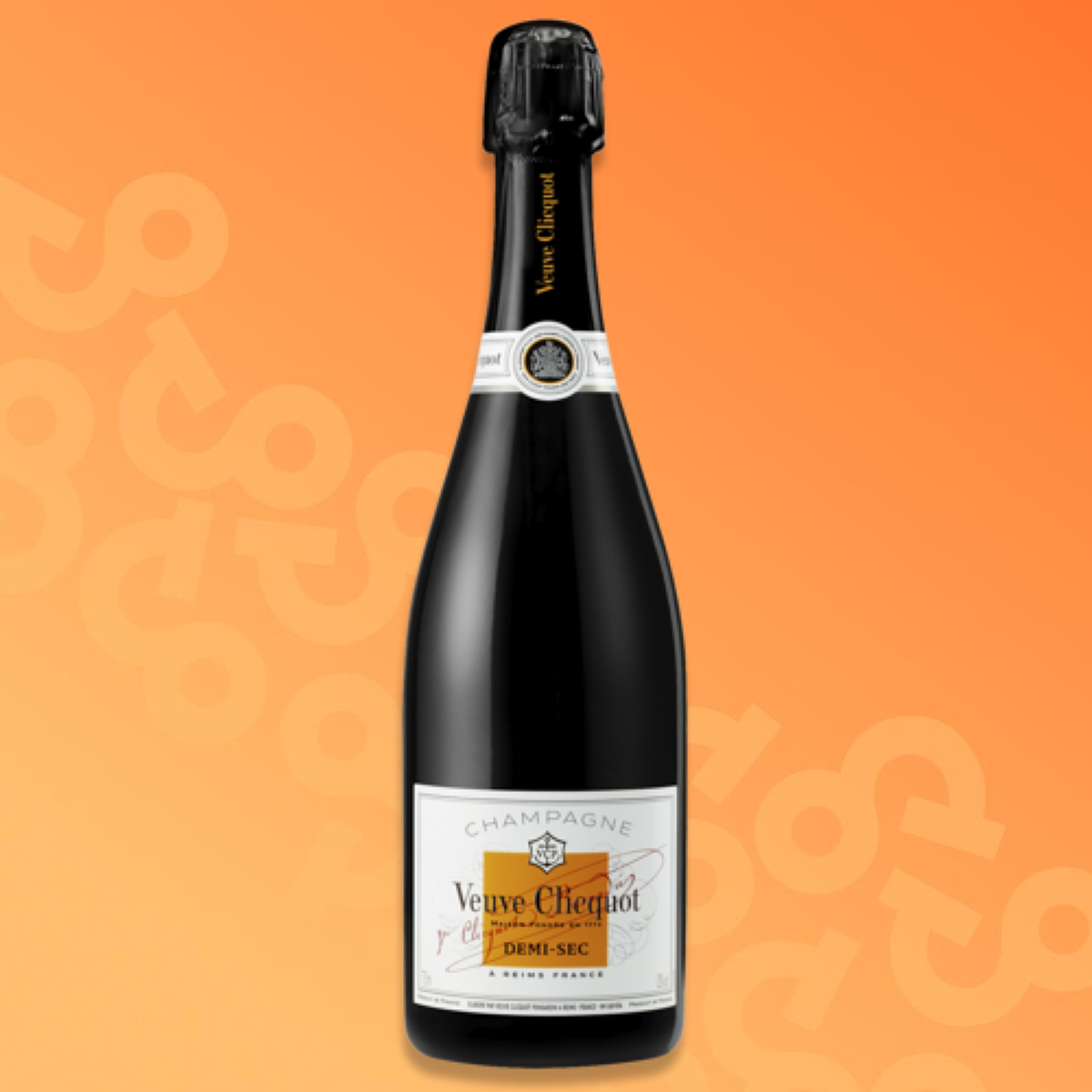
The house covers almost the entire sweetness scale. Brut Vintage has 9 grams of sugar per liter, while Demi Sec has 45.
Yellow Label Brut
Golden yellow with lively bubbles, yellow and white fruit with vanilla and brioche. Fruity, fresh and powerful, with pear, citrus and almond.

Rosé
Deep copper-pink, with raspberry, wild strawberry, cherry and blackberry, followed by pastry notes. Full-bodied and vineous.

Brut Vintage
Vintage champagne made from 51% pinot noir, 34% chardonnay and 15% meunier. Dried apricot, fig, honey and mocha.

Demi Sec
The house’s sweet cuvée, with ripe, candy-like fruit, berries and freshly toasted bread.

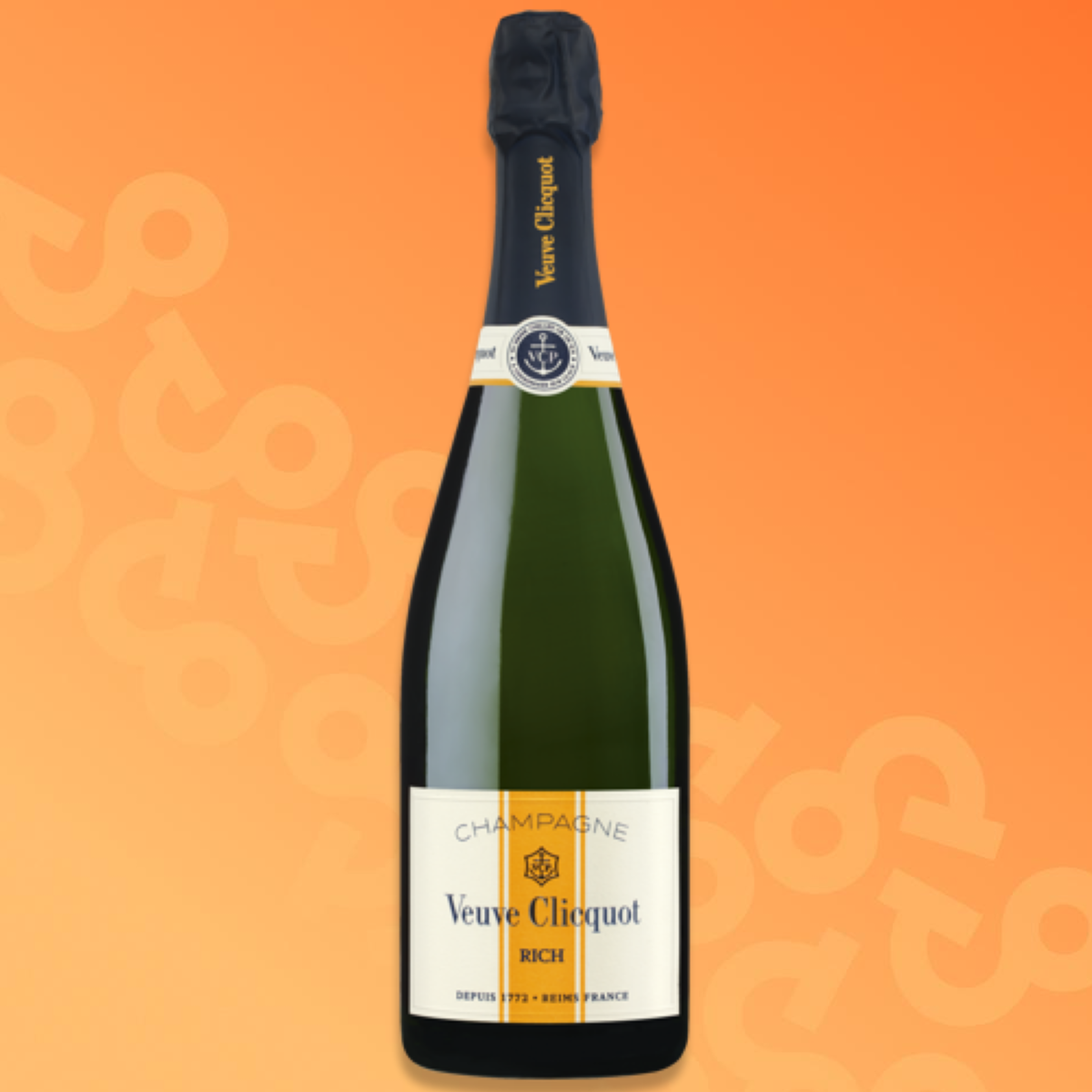
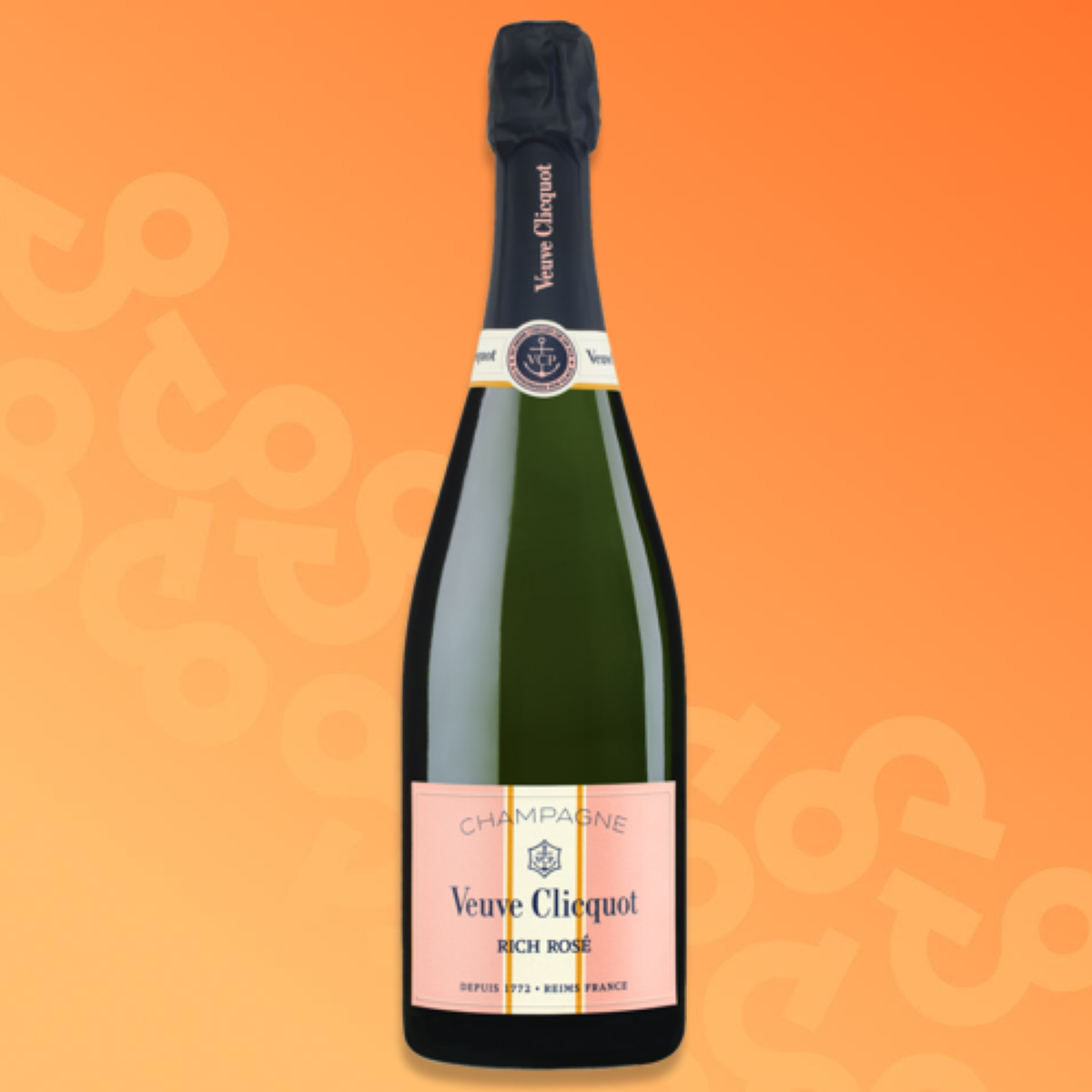
Rich
Made to be poured over ice with one added ingredient: grapefruit, pineapple, bell pepper or cucumber. Citrus and floral notes.

La Grande Dame
The prestige cuvée, named after Barbe Clicquot Ponsardin. Floral, silky and balanced.

Extra Old
Made entirely from reserve wines: over 400 wines from 17 harvest years, with the oldest from 1988.
Our Champagne page covers the full sweetness scale, from brut nature to demi-sec, with the grams of sugar included.
Yellow fruit, vanilla and a vineous finish
Yellow fruit & brioche
Yellow and white fruit, followed by vanilla and brioche. That bread note comes from aging on the lees and is particularly prominent in this house’s style.
Fruity and powerful
Fruity, fresh and powerful, with pear and citrus and notes from longer bottle aging. More body than you’d expect from a 12% bottle.
Vineous with almond
A lovely vinous finish full of diverse fruit and almond. This vinous character comes largely from the reserve wines.
Flavor profile of Yellow Label Brut. Demi Sec scores much higher on sweetness, with 45 grams of sugar per liter, while Brut Vintage scores lower.
Three ways to serve Veuve Clicquot
Chill the bottle to 8 to 10 degrees and turn the bottle rather than the cork when opening, so it comes out with a sigh.
Neat as an aperitif
Pour down the side of a tilted glass and fill it about two-thirds full. A 75 cl bottle makes about five glasses. Yellow Label works just as well as an aperitif as it does with a dish, such as sushi.
Glass: flute or tulip →Rich on ice
Fill a large wine glass with ice cubes, add one ingredient of your choice, and pour in the chilled Rich. Grapefruit, pineapple, bell pepper, or cucumber work well with the white version; lime, ginger, or pineapple with the rosé.
More about champagne →In a cocktail
For a Kir Royal or a Mimosa, you don't need to open a prestige bottle. A regular brut is more than enough, since the cassis or orange juice largely determines the flavor anyway.
See the cocktails →The best cocktails with Veuve Clicquot

Kir Royal
Crème de cassis at the bottom, gently topped up with champagne.
Mimosa
Equal parts orange juice and bubbles, with a splash of Cointreau.
Champagne Cocktail
Sugar cube with bitters at the bottom, then slowly topped up.
French 75
Gin, lemon, and syrup shaken, topped with champagne.The right glass for Veuve Clicquot
A flute for toasting, a tulip glass for the aromas, and a large wine glass for Rich on ice. These are the glasses we recommend ourselves.


Everything else you wanted to know about Veuve Clicquot
Can't find your question here? Check out our cocktail recipes or get in touch.
To the cocktail recipes →What is the alcohol percentage in Veuve Clicquot?
Which grapes are in the Yellow Label?
Why is it called Veuve Clicquot?
How sweet is Demi Sec?
What is Rich intended for?
What is the Yellow Label, exactly?
Buy Veuve Clicquot
Want the bottle at your door right away? Order Veuve Clicquot online from Gall & Gall. Gall & Gall has 17.
Prices as of November 5, 2026, as reported by Gall & Gall. You can find the current price and stock at Gall & Gall. Glazen.nl receives a small commission if you buy something through these links; it costs you nothing extra. No 18, no alcohol.


