



Glass crates
Those who rent, transport, or store glasses between two events lose most of them not behind the bar, but on the way. Loose glasses in a box slide against each other, and a single knock against a rim is enough to cause a crack you only discover once the guest is already drinking.
A glass crate eliminates that risk with a fixed compartment layout. Each glass stands in its own compartment without touching its neighbors, and the crates are stackable, so you can move an entire bar in just a few steps. Bar Professional supplies a crate for thirty-five glasses, with a lid that you can choose separately.
This collection is empty
Continue shopping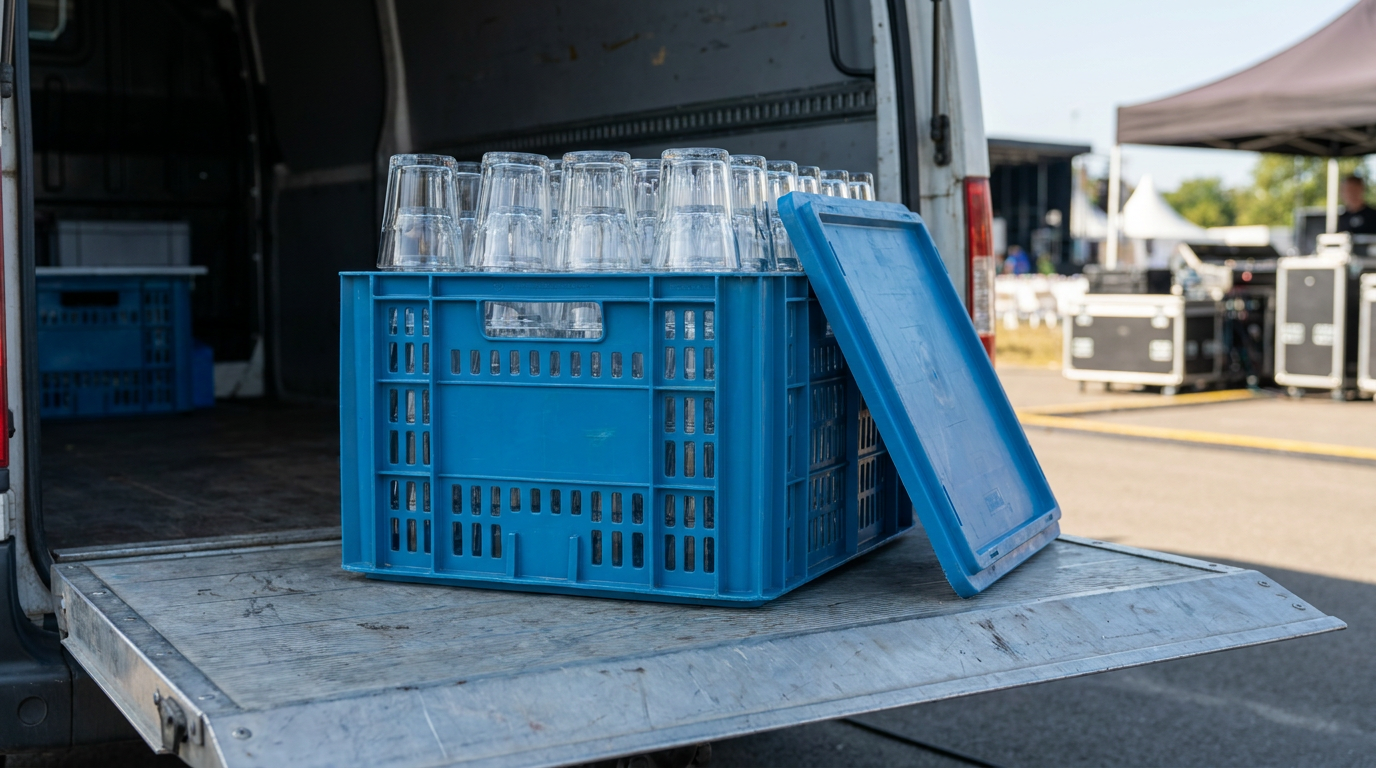
What to look for in a glass crate
Start with the height of your glasses, not with the number. A crate with compartments about twelve centimetres deep keeps tumblers and beer glasses neatly upright, but a stemmed wine glass sticks out bowl and all, and then deserves a lower fill or a second crate. Then look at the compartment size: thirty-five compartments means thirty-five standard glasses, and anyone working with wider lager glasses will in practice have fewer places left.
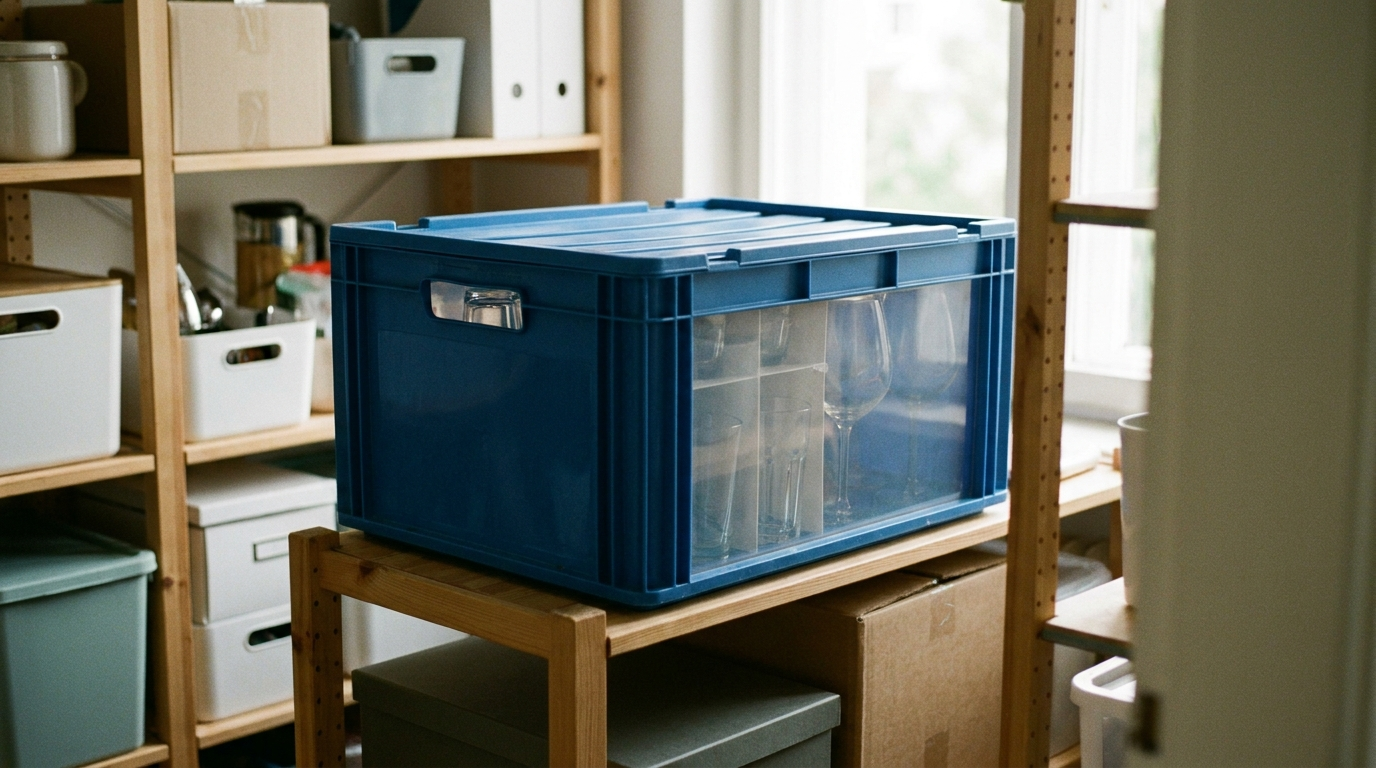
The lid is no luxury once the crates leave the building. It keeps dust and splashes out during storage and makes sure the top layer of glasses does not rest on the rims of the layer below when stacked. Choose the same colour for every crate in a set, or deliberately different colours if you want to sort by type of glass.
Loading, stacking and transporting
Load dry glasses. A glass that is still wet leaves moisture in the compartment, and after a night with the lid on the crate smells musty. Put each glass upright with the opening facing up when you store them clean, and with the opening facing down when you take them back dirty to the wash-up; that way nothing drips into the compartment.
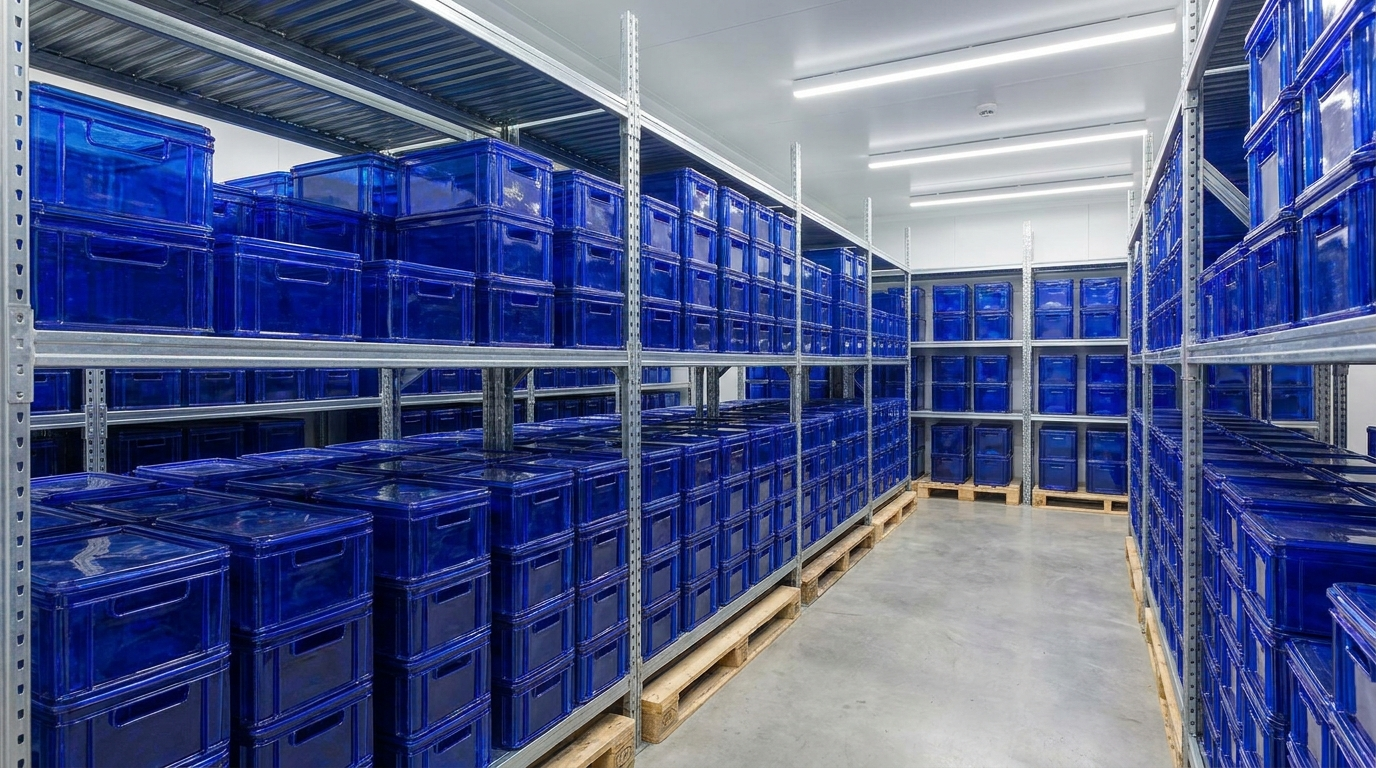
When stacking, put the heaviest crates at the bottom and keep the stack at eye level or lower, so you can still see over the top rim when lifting. If you transport them in a van, put the stack against a wall or behind a ratchet strap. A crate full of glass weighs a great deal, and a sliding stack does more damage than the driving itself. Keep one fixed crate for the hospitality glassware you use most often.
Keeping impact-resistant plastic clean
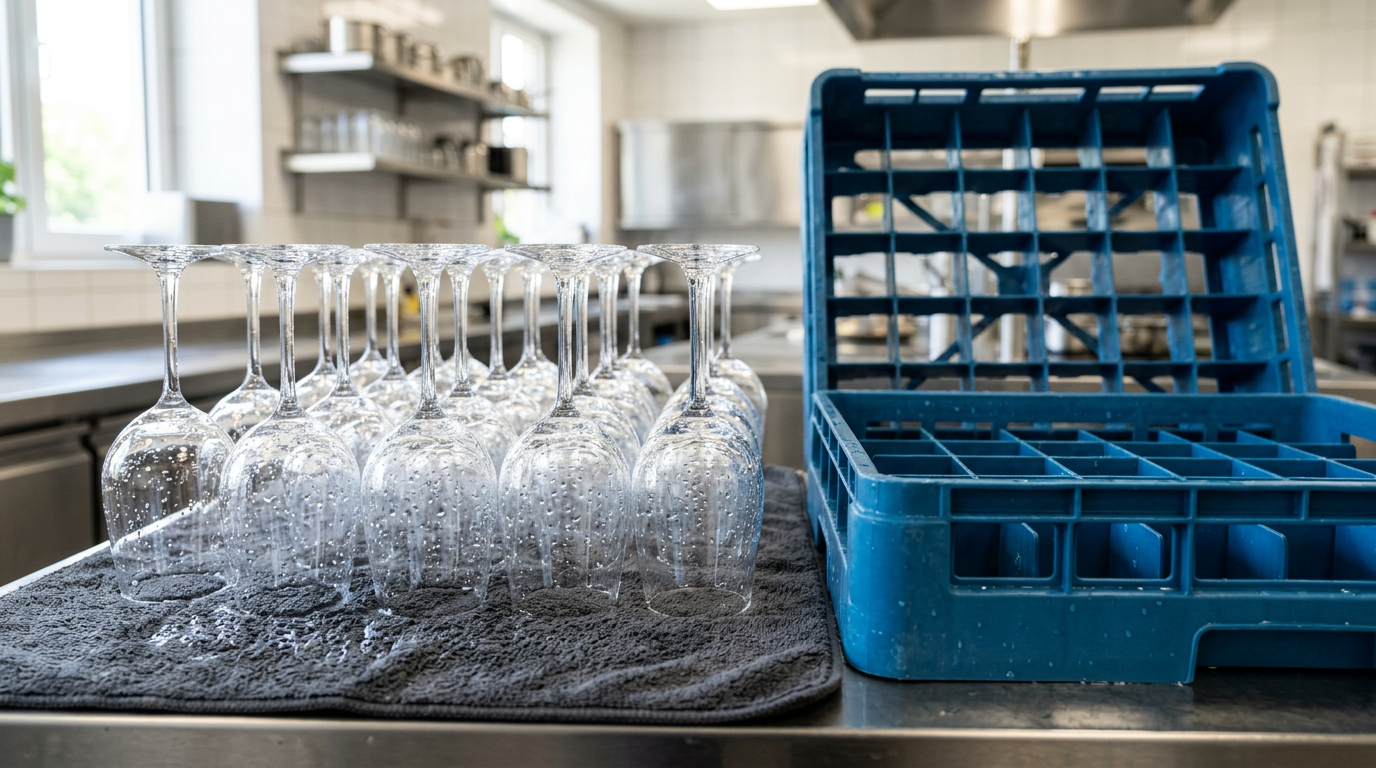
The crates are made of impact-resistant plastic that does not break if you drop it and does not sag when you lift thirty-five glasses at once. Clean them with lukewarm water and a mild detergent; abrasives roughen the surface and that is exactly what attracts dirt. Then let the crate dry completely before the lid goes on. You can use a pressure washer, but keep your distance from the compartment walls, because those are thinner than the outer rim and can distort under a hard jet.
Racks, trays and other bar equipment
If you would rather hang glasses or let them drain than move them, have a look at the glass racks. For serving itself the trays are ready and waiting, and the rest of the kit behind the tap is under bar supplies. If it is the glassware that goes in the crate you are after, start with the lager glasses. The bar tools page sets out which equipment you need behind a mobile bar, and the cocktail page helps you put the menu together.